



Blog
Stay Informed With Expert Auto Tips & Insights
We’re dedicated to providing you with the latest automotive news, maintenance tips, and expert advice. Our blog is your go-to resource for everything from vehicle care to understanding common issues and how to prevent them.
Mastery.
Proficiency.
Creativity.
Revolution.
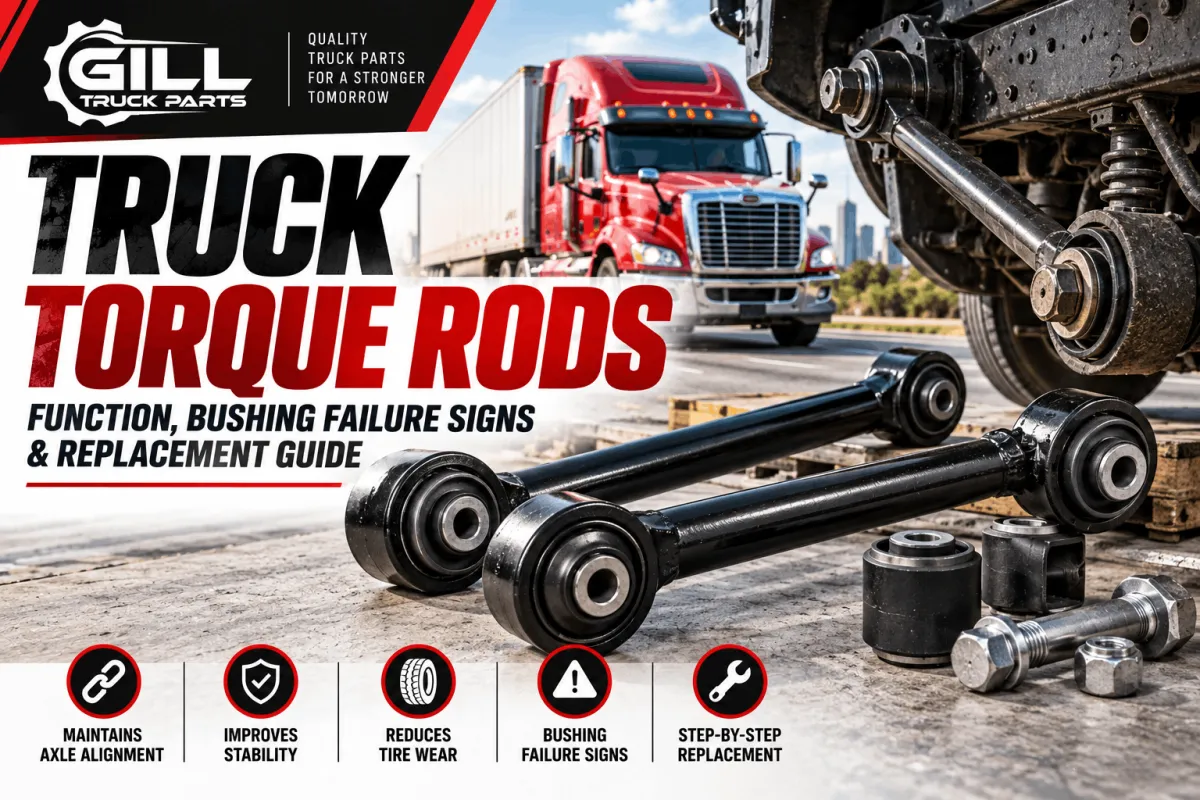
Truck Torque Rods: Function, Bushing Failure Signs & Replacement Guide
Torque rods rarely get attention until something goes wrong. They're not a wear item most drivers have heard of, they don't leak or squeal, and a worn one can look fine from a quick walk-around. Yet these rods hold your drive axles in position under acceleration, braking, and load, and when their bushings deteriorate, the damage spreads quietly into tires, driveline components, and alignment.
This guide is deliberately focused on torque rods themselves: what they do, the different designs, how bushing failure shows up, and how to replace them without creating new problems. If you're looking for coverage of other suspension components, we've written separate guides on air springs and shocks and struts.
Table of Contents
What Is a Torque Rod?
Why Torque Rods Matter: Axle Location and Torque Reaction
Types of Torque Rods
Torque Rod Bushings: The Part That Actually Wears
Signs of Worn Torque Rods or Bushings
What Worn Torque Rods Do to the Rest of the Truck
Common Causes of Torque Rod Failure
How to Inspect Torque Rods
Replacement: Doing It Correctly
How to Choose Replacement Torque Rods
Frequently Asked Questions
Final Thoughts
1. What Is a Torque Rod?
A torque rod is a steel link that connects an axle to the truck's frame or a suspension crossmember. Each end has a bushing, typically rubber, that lets the rod pivot as the suspension moves while keeping the axle in its intended position front to back and side to side.
You may also hear them called radius rods, push rods, or, in V-shaped designs, V-rods or vee bars. The terminology varies by manufacturer and suspension type, but the job is the same: locate the axle and control how it reacts to drive and braking forces.
2. Why Torque Rods Matter: Axle Location and Torque Reaction
Two jobs make torque rods critical on heavy-duty trucks:
Axle location. Air ride and some other suspension designs don't rely on leaf springs to hold the axle in place longitudinally. Torque rods take over that role, keeping the axle square to the frame so the wheels track straight.
Torque reaction. When the engine drives the wheels, the axle housing wants to rotate in the opposite direction. The same thing happens in reverse under hard braking. Torque rods resist that rotation and control the axle's angle, which keeps the driveline geometry within its designed range.
Because they work in both driving and braking directions, torque rods and their bushings absorb repeated load reversals every time the truck accelerates and slows.
3. Types of Torque Rods
Fixed-length torque rods. A single rod with set dimensions, common on many drive axle and trailer suspensions. Simple and durable, but they offer no adjustment.
Adjustable torque rods. Threaded or clamp-style ends let a technician change rod length, which is how axle alignment and pinion angle are set on many suspensions. These are common on drive axles where alignment precision matters.
V-rods (vee bars). A V-shaped rod that connects the top of the differential housing to the frame with two arms meeting at a single pivot. It controls axle rotation and lateral movement together.
Lower and upper rods. Many drive axle setups use a combination of lower rods (locating the axle) and an upper V-rod (controlling torque reaction), and each position may use a different part.
Which design your truck uses depends on the suspension model, so always match replacements to the specific suspension and position.
4. Torque Rod Bushings: The Part That Actually Wears
The rod itself is rarely the failure point. The bushings at each end take the movement, heat, and load, and they wear out first.
Rubber bushings are the most common. They absorb vibration and allow pivoting, but the rubber hardens, cracks, or tears over time, especially with heat, road salt, and oil contamination.
Polyurethane bushings are stiffer and can resist certain types of wear, though they transmit more vibration and aren't suited to every application.
Bonded or pressed-in designs vary by manufacturer. Some rods are serviceable, with bushings replaceable on their own, while others are replaced as a complete assembly.
Whether you replace bushings individually or swap the whole rod usually comes down to labor time, the rod's condition, and what the manufacturer specifies.
5. Signs of Worn Torque Rods or Bushings
Clunking or knocking when shifting between accelerating and decelerating, or when braking hard
Uneven or scalloped tire wear on drive axle tires, particularly if it appeared without an obvious alignment cause
Dog tracking, where the truck or trailer doesn't follow a straight line and seems to crab slightly
Vibration that changes with load or speed, sometimes felt through the floor or seat
Visible cracked, split, or extruded bushing rubber during inspection
Loose or shifting axle position, visible as changed wheel-to-fender clearance or an axle that's no longer square to the frame
Repeated alignment problems that won't hold after adjustment
None of these symptoms is unique to torque rods, so they should be treated as prompts to inspect rather than a diagnosis on their own.
6. What Worn Torque Rods Do to the Rest of the Truck
Because torque rods control axle position and angle, worn ones let that geometry drift. The downstream effects can include:
Accelerated tire wear from misalignment, which shows up as a cost long before the bushing itself looks bad
Driveline stress, since a changed pinion angle can put extra load on U-joints and related components
Loosening hardware and cracked brackets, as unrestrained movement hammers mounting points
Handling and tracking issues that make the truck harder to keep straight, especially under braking
Replacing a set of torque rod bushings is generally far cheaper than replacing a set of drive tires plus driveline parts.
7. Common Causes of Torque Rod Failure
Age and heat cycling, which harden rubber over time
Contamination from oil, grease, or road chemicals that degrade rubber
Overloading, which raises the forces the rod has to resist
Incorrect installation, especially tightening bushing bolts while the suspension is hanging rather than at ride height
Impact damage from potholes, curbs, or off-highway use
Neglected inspection, since worn bushings rarely announce themselves until secondary damage appears
8. How to Inspect Torque Rods
Look at the bushings during regular PM inspections for cracks, tearing, or rubber squeezed out of its housing
Check for movement by using a pry bar to apply gentle force at the rod ends and watching for excess play (following your shop's safety procedures)
Verify hardware is tight and that bolts and brackets show no elongated holes or cracks
Look at the rod body for bends, cracks, or damage from impact
Compare left and right sides, since differences in axle position or bushing condition can point to a problem
Review tire wear on the drive axles as an indirect indicator
Adding torque rod checks to an existing preventive maintenance routine takes minutes and can save far bigger repairs. Our preventive maintenance guide for semi trucks covers how to build inspections like this into a regular schedule.
9. Replacement: Doing It Correctly
A few points matter more than most technicians expect:
Support the truck properly and follow the suspension manufacturer's procedure. Torque rod service involves heavy components and stored forces.
Tighten bushing hardware at ride height. Fastening rubber bushings while the suspension is drooped preloads the rubber, and it will wear out and twist prematurely once the truck sits at normal height.
Set axle alignment and pinion angle after replacement, particularly with adjustable rods, using the manufacturer's specifications.
Replace in sets where practical. If one rod's bushings are worn out, the others on the same axle have seen the same conditions.
Replace worn hardware and inspect brackets at the same time, since new rods on damaged mounts won't hold alignment.
Recheck torque and alignment after a short period of running, as settling can change readings.
10. How to Choose Replacement Torque Rods
Match the suspension model and rod position. Upper, lower, and V-rod parts are not interchangeable.
Confirm length and adjustability against the original. An incorrect length changes axle position immediately.
Check bushing type and quality, and whether bushings are serviceable or the rod is sold as a complete assembly.
Look for heavy-duty construction with quality steel and well-bonded bushings suited to your duty cycle.
Use a supplier who can confirm fitment by make, model, and year rather than just filling a part number.
Gill Truck Parts stocks Dayton Parts torque rods along with steering, suspension, and brake components for fleets across the GTA. If you're not certain which rod your suspension uses, call us with your truck details and we'll help confirm it before you order.
11. Frequently Asked Questions
What does a torque rod do on a truck? It connects the axle to the frame, holding the axle in position and resisting the twisting force that occurs when driving and braking.
How do I know if my torque rod bushings are worn? Common signs include clunking when shifting between acceleration and braking, uneven drive tire wear, dog tracking, and visibly cracked or displaced rubber. Confirm with a physical inspection.
Can I replace just the bushings, or do I need a new rod? It depends on the design. Some rods have serviceable bushings, while others are sold and replaced as assemblies. Check the manufacturer's guidance for your suspension.
Why does tightening bushings at ride height matter? Tightening while the suspension is hanging twists the rubber in a preloaded state. Once the truck settles at normal height, the bushing works against that twist and fails early.
Are torque rods the same as radius rods? The terms are often used interchangeably, though naming varies by manufacturer and suspension type. Always match parts by suspension model and position rather than name alone.
Can worn torque rods cause tire wear? Yes. They let axle alignment drift, which can wear drive tires unevenly before the bushings themselves look badly damaged.
12. Final Thoughts
Torque rods are simple parts with an outsized job, and they tend to fail slowly enough that the damage shows up somewhere else first. Inspecting bushings at regular intervals, replacing them properly at ride height, and checking alignment afterward protects your tires, driveline, and handling far more than the modest cost of the parts would suggest.
Need Torque Rods or Suspension Parts for Your Fleet?
Gill Truck Parts has supplied heavy-duty truck parts to fleets across Mississauga and the Greater Toronto Area for over 15 years. Our team can help you match the right torque rods to your suspension and get them on the shelf fast.
📞 Call us now: 905-564-7710 📍 1295 Shawson Dr, Mississauga, ON L4W 1C4
Related reading: Truck Air Springs Guide | Steering Components for Heavy Duty Trucks | Truck Wheel Bearings Guide
Need Reliable Truck Parts? Get Expert Help Fast
Need dependable heavy duty truck parts in Mississauga or the GTA? Our experts help you quickly find the right components for your truck, reducing downtime and keeping your fleet running safely and efficiently.
Reliable distributor of heavy-duty truck parts in Mississauga, proudly serving the 401 Dixie corridor and the Greater Toronto Area.
Our Partner
Service Area
Contact us
1295 Shawson Dr, Mississauga, ON L4W 1C4

© 2026 Gill Truck Parts. All rights reserved. Powered by Xalovo AI