




Blog
Stay Informed With Expert Auto Tips & Insights
We’re dedicated to providing you with the latest automotive news, maintenance tips, and expert advice. Our blog is your go-to resource for everything from vehicle care to understanding common issues and how to prevent them.
Mastery.
Proficiency.
Creativity.
Revolution.
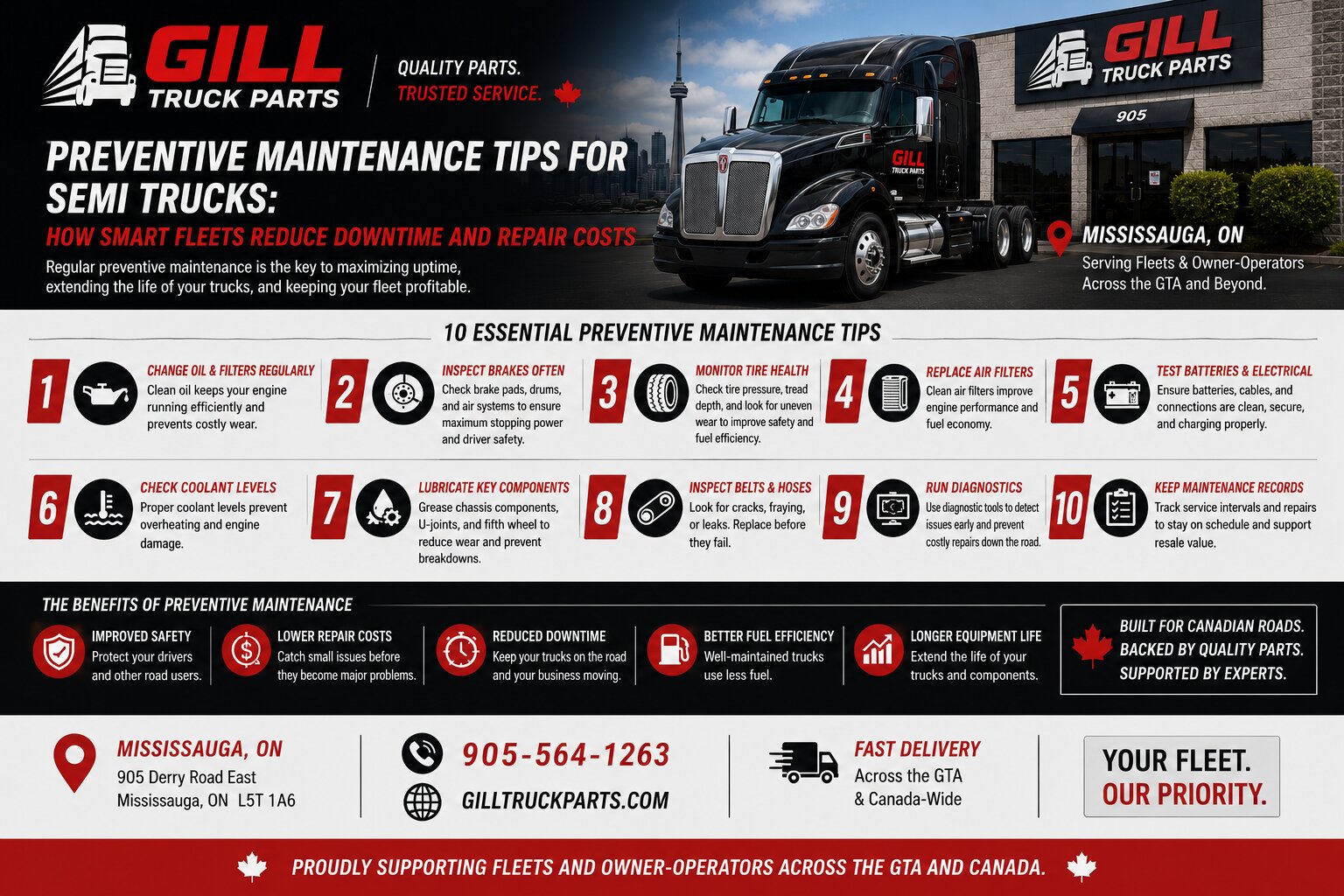
Preventive Maintenance Tips for Semi Trucks: How Smart Fleets Reduce Downtime and Repair Costs
Written by the Gill Truck Parts Team - serving Ontario fleets for over 15 years
The most expensive truck repair is usually the one you didn't see coming.
A failed wheel seal on Highway 401. A damaged air brake component during a roadside inspection. A clogged fuel filter that leaves a driver stranded hundreds of kilometers from home. Most major breakdowns don't happen without warning. The signs are often there long before the truck ends up parked in a repair bay.
That's why preventive maintenance remains one of the most important parts of successful fleet operations.
Whether you're managing a fleet of fifty trucks or operating a single semi-truck, a proactive maintenance program helps reduce downtime, improve safety, and lower long-term operating costs.
Inspect Brake Components Regularly
Brake systems are among the most critical safety systems on any commercial vehicle.
Ignoring worn brake shoes, drums, chambers, or slack adjusters can lead to expensive repairs and failed inspections.
One component we frequently see overlooked in Ontario fleets is the automatic slack adjuster. Drivers often notice brake wear, but slack adjuster issues can develop gradually and may not become obvious until braking performance is affected or an inspection identifies uneven adjustment.
Winter inspection season also tends to reveal brake issues that developed during months of exposure to road salt, moisture, and fluctuating temperatures.
Regular brake inspections should include checking:
Air brake chamber condition
Drum condition
Air leaks
Automatic slack adjuster performance
A scheduled brake repair may cost a fraction of a roadside service event. Emergency roadside brake repairs once towing, lost revenue, technician call-outs, and delayed deliveries are factored in and can easily run into several thousand dollars for a single incident.
Don't Neglect Filters
Few maintenance items deliver a better return on investment than routine filter replacement.
Air filters, fuel filters, and oil filters protect some of the most expensive components on the truck. Yet many fleets delay replacement intervals in an attempt to reduce maintenance costs.
That approach often backfires.
We've seen trucks arrive at repair facilities with drivability complaints that ultimately traced back to overdue fuel filter replacements. What started as a relatively inexpensive service item became diagnostic labor, lost driver time, and an unscheduled repair appointment.
Restricted airflow from a clogged filter places additional strain on the engine and can measurably reduce fuel economy over time. Even a small reduction in fuel efficiency across multiple trucks can create significant operating costs over the course of a year.
Replacing filters on schedule is one of the simplest ways to protect your equipment and improve overall fleet maintenance performance.
Monitor Suspension and Steering Components
Ontario roads are hard on suspension systems.
Potholes, heavy loads, construction zones, and winter freeze-thaw cycles create constant stress on suspension and steering components.
One of the most common suspension failures we see involves suspension bushings. Repeated impacts from deteriorating road surfaces, especially after winter, gradually wear bushings long before drivers notice significant ride quality changes.
By the time uneven tire wear becomes visible, additional suspension and steering components may already be experiencing excess stress.
Pay close attention to:
Suspension bushings
Tie rod ends
Excessive vibration, uneven tire wear, and poor handling are often early warning signs that suspension repairs are needed.
Addressing these issues early helps prevent additional wear on tires, wheel-end components, and steering systems.
Pay Attention to Wheel-End Components
Wheel-end failures can create some of the most expensive roadside breakdowns.
A leaking wheel seal or damaged bearing can quickly turn into a major repair if ignored.
One mistake we see repeatedly is fleets continuing to operate after noticing the first signs of wheel seal leakage. Once lubricant contamination reaches the brake assembly, repair costs can escalate rapidly. What may have started as a seal replacement can eventually involve bearings, brake components, hub work, and significant labor.
Routine inspections should include:
Wheel seals
Bearings
Hub assemblies
Lubrication levels
Fastener condition
Many fleets include wheel-end inspections during every scheduled service interval because the cost of prevention is far lower than the cost of failure.
In many cases, a planned wheel-end service can be completed during a scheduled maintenance appointment. A roadside wheel-end failure can take a truck out of service for the better part of a day once towing, diagnosis, parts sourcing, and repairs are factored in.
Create a Preventive Maintenance Schedule
Good maintenance doesn't happen by accident.
The most effective fleets follow documented service schedules based on mileage, engine hours, operating conditions, and manufacturer recommendations.
A preventive maintenance schedule should include:
Daily Inspections
Lights
Tires
Fluid levels
Air systems
Visible leaks
Monthly Inspections
Suspension components
Steering systems
Wheel-end assemblies
Scheduled Service Intervals
Filter replacements
Fluid changes
Belt inspections
Driveline checks
Cooling system maintenance
Consistency is what makes preventive maintenance effective.
Partner with the Right Truck Parts Supplier
Even the best maintenance program depends on having access to quality parts when needed.
Gill Truck Parts has supported fleets, owner-operators, and diesel repair facilities across Ontario for more than 15 years. We supply OEM and premium aftermarket parts for Freightliner, Kenworth, Peterbilt, Volvo, International, and other commercial truck applications.
Whether you're sourcing routine maintenance items or urgent replacement components, working with an experienced supplier can help reduce downtime and improve repair efficiency.
Browse our full selection of heavy-duty truck parts on our homepage and discover why fleets across Ontario trust Gill Truck Parts for their maintenance needs.
Common Preventive Maintenance Mistakes to Avoid
Even experienced operators occasionally overlook basic maintenance practices.
Some of the most common mistakes include:
Delaying scheduled inspections
Ignoring small fluid leaks
Extending filter replacement intervals
Skipping wheel-end inspections
Waiting for parts to fail before replacing them
Using low-quality replacement components
Each of these shortcuts can increase downtime and repair costs over time.
Conclusion
Think back to that truck sitting on the shoulder of Highway 401.
In most cases, major failures don't happen without warning. Small maintenance issues—whether it's a wheel seal leak, a worn suspension bushing, a restricted fuel filter, or an overlooked brake componentoften provide opportunities for intervention long before they become expensive breakdowns.
The fleets that consistently control operating costs aren't necessarily spending more on maintenance. They're simply addressing problems earlier.
Take a few minutes this week to review your current preventive maintenance schedule. Identify any service intervals that have slipped, check inventory levels on common replacement parts, and make sure your maintenance team has what they need before the next truck enters the shop.
For fleets across the GTA, and for fleets in Eastern Ontario, our truck parts in Ottawa location stocks the same trusted inventory closer to home.
A proactive maintenance review today could prevent your next roadside breakdown tomorrow.
Need Reliable Truck Parts? Get Expert Help Fast
Need dependable heavy duty truck parts in Mississauga or the GTA? Our experts help you quickly find the right components for your truck, reducing downtime and keeping your fleet running safely and efficiently.
Reliable distributor of heavy-duty truck parts in Mississauga, proudly serving the 401 Dixie corridor and the Greater Toronto Area.
Our Partner
Service Area
Contact us
1295 Shawson Dr, Mississauga, ON L4W 1C4

© 2026 Gill Truck Parts. All rights reserved. Powered by Xalovo AI