




Blog
Stay Informed With Expert Auto Tips & Insights
We’re dedicated to providing you with the latest automotive news, maintenance tips, and expert advice. Our blog is your go-to resource for everything from vehicle care to understanding common issues and how to prevent them.
Mastery.
Proficiency.
Creativity.
Revolution.
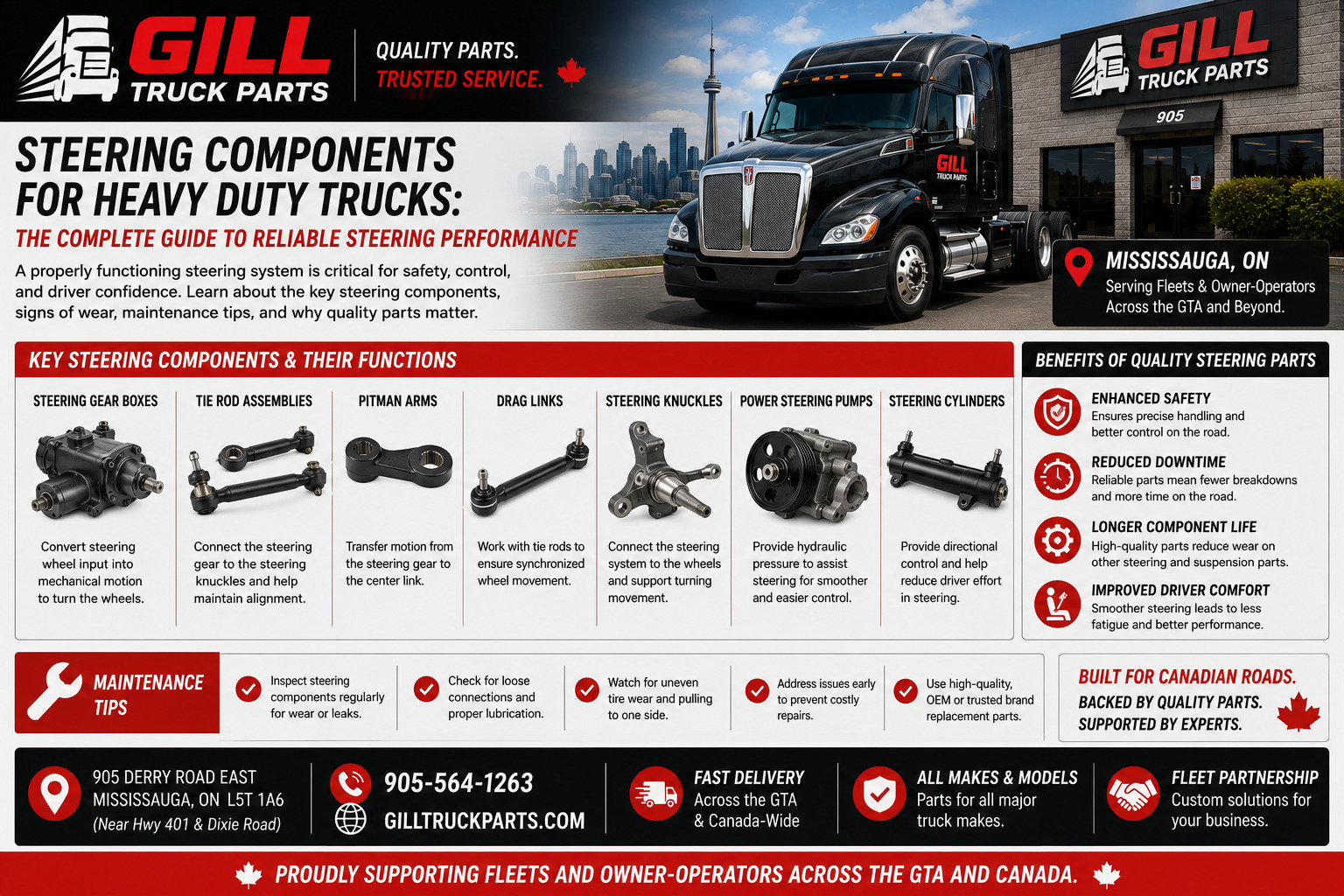
Steering Components for Heavy Duty Trucks: The Complete Guide to Reliable Steering Performance
Heavy-duty trucks rely on a robust steering system to safely transport goods across highways, construction sites, and urban roads. Every component in the steering system plays a vital role in maintaining vehicle stability, driver control, and overall road safety. When even one steering part becomes worn or damaged, it can lead to poor handling, uneven tire wear, increased maintenance costs, and costly downtime.
Understanding steering components for heavy duty trucks helps fleet managers, owner-operators, and repair shops identify potential issues before they become major problems. Whether you're replacing a steering gearbox, tie rod ends, drag links, or a power steering pump, choosing high-quality replacement parts is essential for maximizing performance and extending the lifespan of your truck.
At Gill Truck Parts, we supply reliable heavy-duty truck parts for commercial vehicles across Canada. Our extensive inventory includes steering, suspension, braking, wheel-end, and drivetrain components designed to keep your fleet operating efficiently.
Why the Steering System Matters in Heavy Duty Trucks
Commercial trucks operate under demanding conditions, carrying heavy loads over long distances and through varying road environments. The steering system is responsible for converting the driver's steering input into precise wheel movement while maintaining stability and control.
Benefits of a Well-Maintained Steering System
A properly maintained steering system provides several important benefits:
Improved vehicle control
Better driver safety
Reduced tire wear
Increased fuel efficiency through proper alignment
Less driver fatigue
Lower long-term maintenance costs
Improved overall fleet reliability
Routine inspections and timely replacement of worn steering components help prevent unexpected breakdowns and improve the overall performance of commercial trucks.
What Are Steering Components for Heavy Duty Trucks?
Steering components are the mechanical and hydraulic parts that work together to control the direction of a heavy-duty truck. These components transfer the driver's input from the steering wheel to the front wheels, allowing the vehicle to turn safely and accurately.
A modern heavy-duty truck steering system is designed to withstand significant loads while delivering precise steering response under challenging operating conditions. Because every component depends on the others, excessive wear in a single part can negatively affect the entire steering system.
Purpose of a Heavy-Duty Truck Steering System
The primary purpose of the steering system is to provide safe, predictable, and responsive vehicle handling. A properly functioning steering system helps:
Maintain directional stability
Improve steering precision
Support heavy vehicle loads
Reduce steering effort through hydraulic assistance
Minimize wear on suspension and tire components
How the Steering System Works
When the driver turns the steering wheel, the steering column transfers that movement to the steering shaft. The steering gearbox converts the rotational movement into side-to-side motion, which is then transferred through the pitman arm, drag link, and tie rod ends to the steering knuckles. These components work together to turn the front wheels while the power steering system reduces the effort required by the driver.
Main Steering Components in Heavy Duty Trucks
Each steering component has a specific function and contributes to the safe operation of the vehicle.
Steering Gear Box
The steering gearbox converts the rotation of the steering wheel into the movement required to turn the front wheels. It also multiplies steering force, making it easier to maneuver heavy commercial vehicles.
Functions of the Steering Gear Box
Converts steering wheel movement into wheel movement
Increases steering leverage
Improves steering precision
Reduces driver effort
Common Signs of Steering Gear Box Failure
Excessive steering wheel play
Hard steering
Hydraulic fluid leaks
Steering vibration
Knocking noises during turns
A worn steering gearbox should be replaced promptly to maintain safe handling and prevent additional wear on related steering components.
Common Signs Your Steering Components Need Replacement
Steering components naturally wear over time due to heavy loads, rough road conditions, and continuous use. Recognizing the early warning signs can help prevent costly repairs, reduce vehicle downtime, and improve road safety.
Loose Steering Wheel
A loose steering wheel is often one of the first signs of worn steering components. Excessive play means the steering wheel can move before the front wheels respond.
Common Causes
Worn tie rod ends
Damaged drag link
Loose steering gearbox
Worn pitman arm
Steering shaft wear
Ignoring this issue can reduce vehicle control, especially at highway speeds.
Excessive Steering Play
Steering play occurs when there is too much movement in the steering system before the wheels begin to turn. Commercial trucks should respond quickly and accurately to steering input.
Why It Happens
Worn steering linkage
Loose steering gearbox adjustment
Damaged steering shaft joints
Worn idler arm
Routine inspections help identify these problems before they affect overall vehicle safety.
Uneven Tire Wear
Uneven tire wear is often caused by steering or suspension problems. Misaligned steering components prevent the tires from making proper contact with the road.
Signs to Watch For
Feathered tire edges
Inside tire wear
Outside shoulder wear
Cupping or scalloped tread patterns
Replacing worn steering parts and performing a wheel alignment can significantly extend tire life.
Steering Wheel Vibration
If the steering wheel vibrates while driving, it may indicate worn steering components or alignment issues.
Possible Causes
Loose tie rod ends
Damaged steering linkage
Bent steering components
Wheel alignment issues
Suspension wear
Addressing vibration early prevents additional wear on surrounding components.
Hard Steering
Modern heavy-duty trucks use hydraulic power steering systems to reduce steering effort. If steering suddenly becomes difficult, the power steering system or steering gearbox may require attention.
Possible Causes
Low power steering fluid
Failing power steering pump
Hydraulic hose leaks
Internal steering gearbox damage
Hard steering increases driver fatigue and can create unsafe driving conditions.
Hydraulic Fluid Leaks
Hydraulic fluid is essential for power steering performance. Leaks reduce steering assistance and may eventually damage the power steering pump.
Common Leak Locations
Power steering pump
Hydraulic hoses
Steering gearbox seals
Hose fittings
Reservoir connections
Hydraulic leaks should be repaired immediately to avoid expensive system failures.
Clunking or Knocking Noises
Unusual noises while turning or driving over bumps often indicate worn steering linkage.
Components Commonly Responsible
Tie rod ends
Drag links
Pitman arms
Idler arms
Steering shaft joints
These noises should never be ignored because they often indicate excessive component wear.
Common Causes of Steering Component Failure
Heavy-duty trucks operate under demanding conditions that place continuous stress on steering systems. Understanding why steering components fail helps fleet managers schedule preventive maintenance before serious problems develop.
Heavy Loads
Commercial trucks regularly carry substantial cargo, placing continuous pressure on steering linkage, steering gearboxes, and suspension systems. Overloaded vehicles accelerate wear on steering components and shorten their service life.
Rough Road Conditions
Construction sites, gravel roads, potholes, and uneven pavement create repeated impacts that gradually damage steering parts. Frequent operation in harsh environments increases the likelihood of premature component failure.
Lack of Lubrication
Many steering linkage components require periodic lubrication to minimize friction and wear. Neglecting lubrication allows contaminants to enter moving joints, reducing their lifespan.
Corrosion and Moisture
Road salt, water, and dirt can corrode steering components, particularly in regions with harsh winters. Rust weakens metal surfaces and may damage protective seals, allowing moisture to enter critical joints.
Missed Preventive Maintenance
Small steering issues often become major repairs when routine inspections are skipped. Regular maintenance helps identify worn parts before they cause alignment problems, tire wear, or steering instability.
Preventive Maintenance Tips for Heavy Duty Truck Steering Systems
Preventive maintenance is one of the most effective ways to maximize the lifespan of steering components while reducing unexpected breakdowns.
Perform Regular Steering Inspections
Inspect steering components during scheduled maintenance intervals.
Check for:
Loose fasteners
Damaged boots
Hydraulic leaks
Excessive steering play
Worn linkage components
Cracked mounting brackets
Routine inspections reduce the risk of unexpected failures on the road.
Lubricate Steering Components
Proper lubrication minimizes friction between moving parts and protects against premature wear.
Always follow the manufacturer's maintenance schedule and use the recommended grease for steering linkage components.
Check Wheel Alignment
Misaligned wheels increase stress on steering components and accelerate tire wear.
A professional wheel alignment should be performed whenever:
Steering parts are replaced
Suspension repairs are completed
Uneven tire wear is observed
The truck begins pulling to one side
Inspect Hydraulic Fluid
Power steering fluid should be inspected regularly for:
Proper fluid level
Contamination
Burnt smell
Metal particles
Discoloration
Replacing contaminated fluid helps protect the steering pump and gearbox.
Replace Worn Components Promptly
Replacing worn steering parts before complete failure prevents damage to surrounding components and reduces repair costs.
Using high-quality replacement parts also improves reliability and extends service intervals.
OEM vs. Aftermarket Steering Components
When replacing steering parts, truck owners often choose between Original Equipment Manufacturer (OEM) and aftermarket components. Both options offer advantages depending on the vehicle's operating requirements and maintenance budget.
Benefits of OEM Steering Parts
OEM steering components are manufactured to meet the original specifications of the vehicle.
Advantages include:
Guaranteed fit and compatibility
Consistent quality
Manufacturer-backed engineering
Reliable long-term performance
OEM parts are often preferred for newer trucks or fleets following manufacturer maintenance programs.
Benefits of Aftermarket Steering Parts
Quality aftermarket steering components provide excellent value while meeting or exceeding OEM performance standards.
Benefits include:
Lower replacement costs
Wider product availability
High-performance upgrade options
Competitive warranties
Excellent reliability from trusted brands
Purchasing aftermarket parts from a reputable supplier ensures dependable performance and long service life.
Which Option Is Right for Your Fleet?
The best choice depends on your operating conditions, maintenance strategy, and budget. Many commercial fleets successfully use premium aftermarket steering components that deliver reliable performance while reducing operating costs.
Working with an experienced truck parts supplier can help you choose steering components that match your truck's specifications and application.
How to Choose Quality Steering Components for Heavy Duty Trucks
Selecting the right steering components is essential for maintaining vehicle safety, minimizing downtime, and maximizing the lifespan of your truck. Not all replacement parts offer the same level of quality, so it's important to evaluate several factors before making a purchase.
Verify Vehicle Compatibility
Always ensure the replacement part matches your truck's make, model, year, and steering system specifications. Installing incompatible steering components can affect handling, wheel alignment, and overall safety.
Choose Durable Materials
Heavy-duty trucks operate in demanding environments, so steering components should be manufactured from high-strength materials that resist wear, corrosion, and heavy loads.
Look for components that feature:
Heat-treated steel construction
Corrosion-resistant coatings
High-quality bushings and seals
Precision-machined mounting surfaces
Buy From Trusted Brands
Choosing steering components from reputable manufacturers helps ensure long-lasting performance and reliable operation. Established brands typically invest in better engineering, quality control, and product testing.
Consider Warranty Coverage
A manufacturer's warranty reflects confidence in product quality. Steering components backed by a solid warranty provide added peace of mind and help protect your investment.
Work With a Reliable Truck Parts Supplier
An experienced supplier can help you identify the correct replacement parts while providing expert guidance based on your truck's application and maintenance requirements.
OEM vs. Aftermarket Steering Components Comparison
FeatureOEM Steering PartsPremium Aftermarket Steering PartsFit & CompatibilityExact factory specificationsDesigned to meet or exceed OEM specificationsCostHigherMore cost-effectiveAvailabilityMay require orderingOften readily availableWarrantyManufacturer warrantyVaries by manufacturerPerformanceOriginal factory performanceComparable or enhanced performanceBest ForNew vehicles and warranty programsFleets, owner-operators, and cost-conscious maintenance
When sourced from a trusted supplier, premium aftermarket steering components can provide excellent value without compromising safety or reliability.
Steering System Maintenance Checklist
Routine maintenance helps reduce unexpected failures and extends the lifespan of steering components.
Perform these inspections regularly:
Inspect tie rod ends for excessive movement.
Check drag links for wear or looseness.
Examine the steering gearbox for leaks.
Inspect the pitman arm and idler arm.
Verify steering shaft universal joints.
Check hydraulic hoses for cracks or leaks.
Inspect the power steering pump.
Monitor power steering fluid condition.
Check front-end alignment.
Inspect tires for uneven wear.
Following a preventive maintenance schedule helps reduce repair costs while improving vehicle safety and reliability.
Why Buy Steering Components from Gill Truck Parts?
At Gill Truck Parts, we understand the importance of dependable steering performance for commercial vehicles. Our goal is to help fleets, repair shops, and owner-operators keep their trucks operating safely and efficiently.
Extensive Inventory
We carry a wide selection of heavy-duty truck parts, including steering, suspension, braking, wheel-end, drivetrain, and air system components for many commercial truck applications.
Quality Products
Our inventory includes trusted replacement parts designed for durability, performance, and dependable service in demanding operating conditions.
Expert Product Support
Our knowledgeable team can help identify the right steering components for your truck, helping reduce ordering errors and installation delays.
Fast Availability
With a large inventory available for pickup and order fulfillment, we help minimize downtime and keep commercial vehicles on the road.
Whether you need a steering gearbox, tie rod ends, drag links, pitman arms, steering shafts, or other heavy-duty truck steering parts, Gill Truck Parts is committed to providing dependable solutions for your maintenance needs.
Frequently Asked Questions
How long do heavy-duty truck steering components last?
The lifespan depends on driving conditions, vehicle load, maintenance practices, and road quality. Many steering components last between 150,000 and 300,000 kilometers, although regular inspections are the best way to determine when replacement is necessary.
What causes excessive steering play?
Excessive steering play is commonly caused by worn tie rod ends, drag links, steering gearboxes, pitman arms, idler arms, or steering shaft components.
Can tie rod ends be replaced individually?
Yes. If only one tie rod end is worn, it can often be replaced individually. However, technicians should inspect the entire steering linkage because related components may also show signs of wear.
How often should steering components be inspected?
Steering components should be inspected during every scheduled preventive maintenance service and immediately if drivers notice unusual steering behavior, vibration, or tire wear.
Are aftermarket steering components reliable?
High-quality aftermarket steering components from reputable manufacturers are designed to meet or exceed OEM performance standards and are widely used throughout the commercial trucking industry.
Which steering components wear out the fastest?
Tie rod ends, drag links, pitman arms, idler arms, steering shaft joints, and hydraulic hoses are among the steering components that commonly experience wear due to constant movement and heavy operating loads.
Conclusion
The steering system is one of the most critical safety systems on any commercial truck. Every component—from the steering gearbox and steering shaft to tie rod ends, drag links, pitman arms, and hydraulic steering hoses—works together to deliver precise control and stable handling.
Routine inspections, preventive maintenance, and timely replacement of worn steering components help improve vehicle safety, reduce operating costs, extend tire life, and minimize unexpected downtime.
Whether you manage a commercial fleet, operate as an owner-operator, or maintain heavy-duty trucks in a repair facility, investing in high-quality steering components is essential for long-term reliability.
Gill Truck Parts proudly supplies dependable heavy-duty truck steering components and other commercial truck parts to help keep Canadian trucks operating safely and efficiently. Contact our team to find the right replacement parts for your vehicle and keep your fleet moving with confidence.
Need Reliable Truck Parts? Get Expert Help Fast
Need dependable heavy duty truck parts in Mississauga or the GTA? Our experts help you quickly find the right components for your truck, reducing downtime and keeping your fleet running safely and efficiently.
Reliable distributor of heavy-duty truck parts in Mississauga, proudly serving the 401 Dixie corridor and the Greater Toronto Area.
Our Partner
Service Area
Contact us
1295 Shawson Dr, Mississauga, ON L4W 1C4

© 2026 Gill Truck Parts. All rights reserved. Powered by Xalovo AI