




Blog
Stay Informed With Expert Auto Tips & Insights
We’re dedicated to providing you with the latest automotive news, maintenance tips, and expert advice. Our blog is your go-to resource for everything from vehicle care to understanding common issues and how to prevent them.
Mastery.
Proficiency.
Creativity.
Revolution.
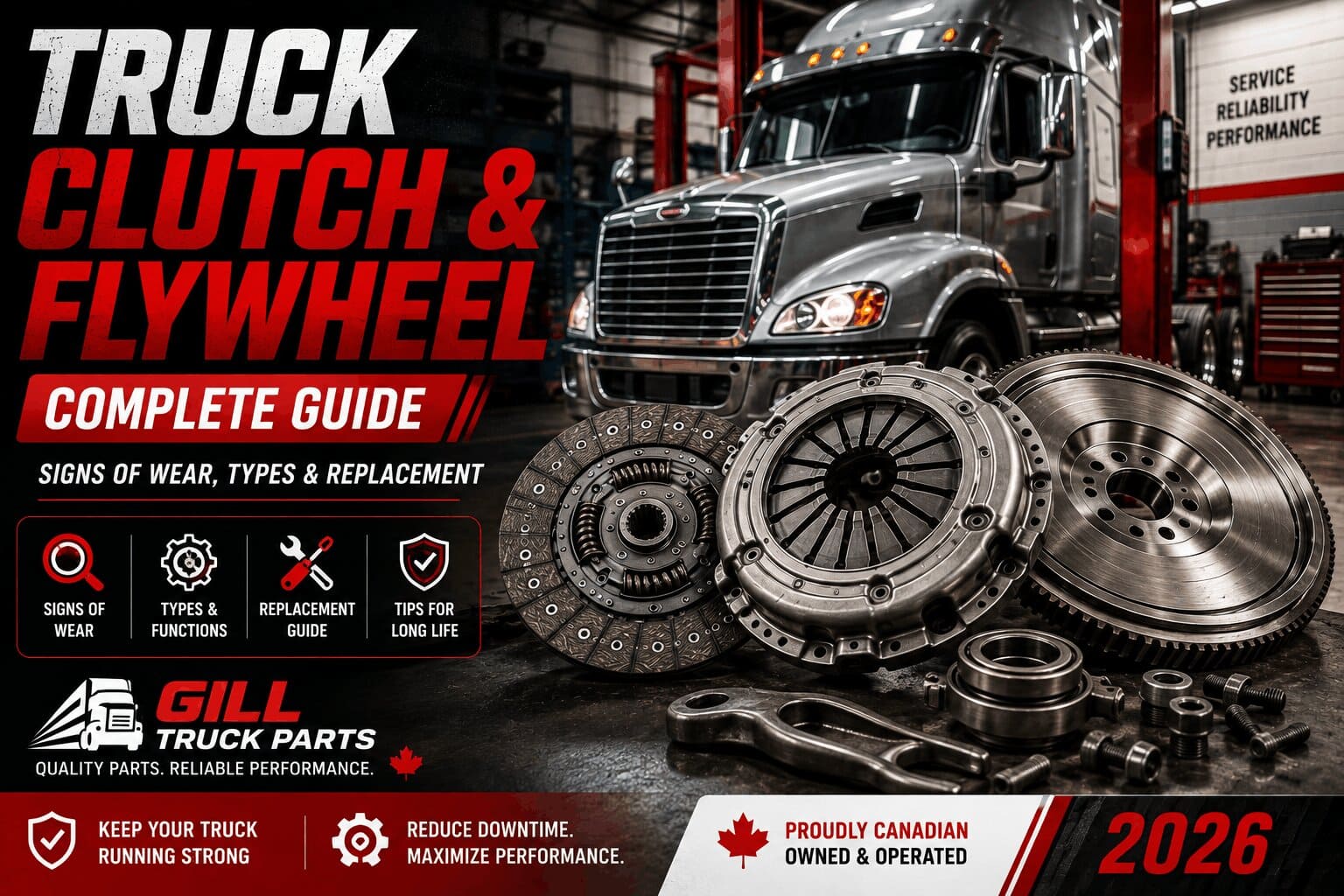
Truck Clutch & Flywheel Guide: Signs of Wear, Types & Replacement (2026)
For fleets still running manual and automated manual transmissions, the clutch and flywheel are among the hardest-working components in the entire drivetrain. Every gear change, every hill start, every heavy load pulled from a stop puts stress on this system. Unlike many wear items that fail gradually and quietly, a failing clutch tends to make itself known — but by the time drivers notice slipping or shuddering, damage is often already progressing toward more expensive repairs.
At Gill Truck Parts, clutch and flywheel questions are some of the most common we field from owner-operators and fleet maintenance teams alike, largely because clutch replacement is a significant labor job and getting the parts selection right the first time matters. This guide covers how the system works, how to catch wear early, and how to choose replacement components that last.
Table of Contents
How the Clutch and Flywheel System Works
Key Components of a Heavy-Duty Clutch System
Types of Truck Clutches
Signs Your Clutch Is Wearing Out
Signs Your Flywheel Needs Attention
Common Causes of Premature Clutch Wear
Clutch vs. Flywheel: Do You Need to Replace Both?
Inspection and Maintenance Best Practices
How to Choose Quality Replacement Parts
Frequently Asked Questions
Final Thoughts
1. How the Clutch and Flywheel System Works
The clutch system sits between the engine and the transmission, managing how engine power is transferred to the drivetrain. When the driver presses the clutch pedal, the clutch disc disengages from the flywheel, temporarily interrupting power flow so gears can be changed. When the pedal is released, the clutch disc is pressed back against the flywheel, re-engaging power transfer smoothly.
The flywheel itself is a heavy rotating disc bolted to the engine's crankshaft. It serves two purposes: providing a friction surface for the clutch disc to grip, and storing rotational energy that helps smooth out engine power delivery, particularly at low RPMs.
Because this system handles the full torque output of a heavy-duty diesel engine — often well over 1,000 lb-ft in modern trucks — every component needs to be correctly matched and properly maintained to avoid premature failure.
2. Key Components of a Heavy-Duty Clutch System
Clutch disc — the friction plate that engages the flywheel
Pressure plate — applies clamping force to engage the clutch disc against the flywheel
Flywheel — the rotating friction surface attached to the crankshaft
Release bearing (throw-out bearing) — allows smooth disengagement when the pedal is pressed
Clutch brake — helps stop input shaft rotation for smoother gear engagement, especially important in unsynchronized heavy-duty transmissions
Pilot bearing/bushing — supports the transmission input shaft where it meets the flywheel
3. Types of Truck Clutches
Single-Disc Clutches
The most common configuration for medium-duty applications, using one friction disc between the pressure plate and flywheel.
Double-Disc (Two-Plate) Clutches
Common in heavier-duty applications and high-torque engines, using two friction discs to handle greater torque loads while keeping the overall clutch diameter manageable.
Pull-Type vs. Push-Type Clutches
Refers to how the release bearing engages — pulling the pressure plate fingers versus pushing them. This affects the release mechanism design and is an important compatibility factor when sourcing replacement parts.
Automated Manual Transmission (AMT) Clutches
Used in trucks with automated manual transmissions, these clutches are electronically actuated rather than pedal-operated, but still rely on the same fundamental friction disc and flywheel principles, with wear patterns and replacement needs similar to traditional manual systems.
4. Signs Your Clutch Is Wearing Out
Slipping under load If engine RPM increases without a corresponding increase in road speed — especially when climbing a grade or pulling a heavy load — the clutch disc is likely worn and unable to maintain full grip against the flywheel.
Burning smell A sharp, burning odor (often compared to burning material) typically indicates clutch disc friction material is overheating from slippage.
Shuddering on engagement Vibration or shuddering when releasing the clutch pedal, particularly from a stop, can indicate uneven wear, contamination, or a warped pressure plate.
Difficulty shifting gears Grinding or resistance when shifting can point to clutch disengagement issues, often related to release bearing wear or improper clutch adjustment.
High or spongy pedal engagement point A significant change in where the clutch pedal engages can signal wear in the disc or adjustment mechanism.
Unusual noises when the pedal is pressed Chirping, squealing, or rattling when the clutch pedal is depressed often points to a worn release bearing or pilot bearing.
5. Signs Your Flywheel Needs Attention
While flywheels last significantly longer than clutch discs, they still require inspection whenever a clutch is replaced:
Heat cracking or blue discoloration from excessive friction heat
Scoring or grooving on the friction surface from prolonged contact with a worn clutch disc
Warping, which can cause vibration and uneven clutch engagement
Worn ring gear teeth, which can affect starter engagement
A scored or warped flywheel can prevent even a brand-new clutch disc from engaging properly, which is why resurfacing or replacement is often recommended alongside clutch service.
6. Common Causes of Premature Clutch Wear
Riding the clutch — resting a foot on the pedal during driving, causing partial slippage
Aggressive launches — repeatedly engaging the clutch too quickly under heavy load
Overloading beyond the clutch's torque rating
Improper adjustment, leading to incomplete engagement or disengagement
Contamination from oil or grease leaks affecting friction material
Mismatched components, such as a clutch disc rated for lower torque than the engine produces
7. Clutch vs. Flywheel: Do You Need to Replace Both?
Not always — but it's worth evaluating both any time clutch service is performed. Since accessing the clutch requires separating the transmission from the engine (a labor-intensive job), most fleet maintenance programs treat flywheel inspection as a standard part of any clutch replacement, since the labor to address both at once is far less than performing the same teardown twice.
If the flywheel shows only light wear, resurfacing (machining the friction surface flat and smooth again) is often sufficient. If it's cracked, significantly scored, or warped beyond resurfacing tolerances, full replacement is typically recommended.
8. Inspection and Maintenance Best Practices
Monitor for early slipping or shuddering symptoms rather than waiting for complete failure
Check clutch adjustment periodically, particularly on cable or linkage-actuated systems
Inspect for fluid leaks near the bellhousing during routine service, since oil contamination significantly shortens clutch life
Train drivers on proper clutch usage — avoiding riding the pedal and using appropriate launch technique for load conditions
Log clutch service history by vehicle to identify any recurring premature wear patterns that might point to a mismatched component or driver habit issue
9. How to Choose Quality Replacement Parts
Because clutch replacement is labor-intensive, getting the parts specification right the first time matters significantly for both cost and downtime. Look for:
Torque rating matched to your engine's output, not just physical size compatibility
OEM-specification friction material designed for heavy-duty duty cycles
Matched kits (disc, pressure plate, release bearing, pilot bearing) to ensure consistent wear characteristics across components
Reputable manufacturers with proven performance in similar applications
Flywheel resurfacing or replacement parts sourced to the correct specification for your transmission and bellhousing configuration
At Gill Truck Parts, we stock a wide range of Clutch Kits, Flywheels, and Release Bearings for fleets across the GTA, helping you get the right parts the first time and minimize downtime.
10. Frequently Asked Questions
How long do heavy-duty truck clutches typically last? Lifespan varies significantly based on driving style, load, and terrain, which is why most fleets rely on watching for wear symptoms rather than a fixed mileage figure.
Can a flywheel be resurfaced instead of replaced? In many cases, yes — light scoring or glazing can often be machined smooth again, though a cracked or significantly warped flywheel typically requires full replacement.
What does a slipping clutch feel like? Engine RPM rises without a matching increase in road speed, most noticeably under load such as climbing a grade or accelerating from a stop with a full trailer.
Does riding the clutch really shorten its lifespan? Yes — even light, continuous pressure on the pedal during driving causes partial slippage and accelerated friction material wear over time.
Should the flywheel always be replaced with the clutch? Not always, but it should always be inspected during clutch service, since addressing both in the same teardown avoids paying for the labor twice.
11. Final Thoughts
The clutch and flywheel system takes on some of the highest stress loads in a manual or automated-manual drivetrain, and neglecting early warning signs almost always turns a moderate repair into a more expensive one. Watching for slipping, shuddering, or unusual noises — and addressing the flywheel alongside any clutch replacement — will keep your trucks reliable and minimize costly repeat teardowns.
Need Clutch, Flywheel, or Drivetrain Parts for Your Fleet?
Gill Truck Parts has supplied heavy-duty truck parts to fleets across Mississauga and the Greater Toronto Area for over 15 years. Our team can help you find the right clutch and drivetrain components fast, backed by trusted brands.
📞 Call us now: 905-564-7710 📍 1295 Shawson Dr, Mississauga, ON L4W 1C4
Related reading: Truck Shocks and Struts: The Complete Guide | Truck Wheel Bearings: The Complete Guide | Preventive Maintenance Tips for Semi Trucks
Need Reliable Truck Parts? Get Expert Help Fast
Need dependable heavy duty truck parts in Mississauga or the GTA? Our experts help you quickly find the right components for your truck, reducing downtime and keeping your fleet running safely and efficiently.
Reliable distributor of heavy-duty truck parts in Mississauga, proudly serving the 401 Dixie corridor and the Greater Toronto Area.
Our Partner
Service Area
Contact us
1295 Shawson Dr, Mississauga, ON L4W 1C4

© 2026 Gill Truck Parts. All rights reserved. Powered by Xalovo AI