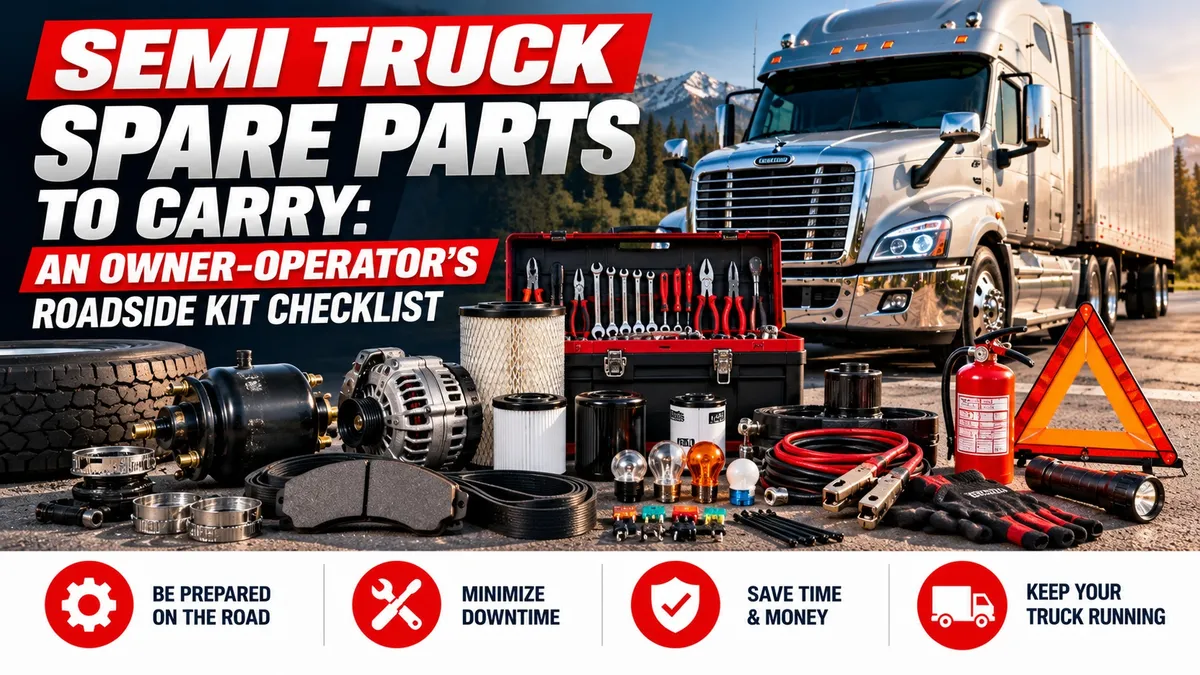
Semi Truck Spare Parts to Carry: An Owner-Operator's Roadside Kit Checklist
A breakdown is never convenient, but a breakdown on a Tuesday night, 200 kilometres from your regular shop, with a $15 part standing between you and a delivery, is the kind that hurts. Plenty of roadside stops turn into expensive tows and lost loads because a small, cheap item wasn't on the truck.
This guide is for owner-operators and small fleets deciding what to carry. It's not about hauling a parts counter around. It's about a short list of items that fix common problems quickly, plus the judgment to know which problems you shouldn't try to fix at the roadside. For scheduled maintenance, see our preventive maintenance guide for semi trucks.
Table of Contents
How to Decide What to Carry
Belts, Hoses, and Cooling Items
Air System Spares
Electrical and Lighting Spares
Filters and Fluids
Tools and Basic Supplies
Safety and Warning Equipment
What You Shouldn't Carry (or Attempt)
Seasonal Additions for Ontario
Building and Maintaining Your Kit
Frequently Asked Questions
Final Thoughts
1. How to Decide What to Carry
A good kit follows a few principles:
Carry parts that fail often and fit your truck. Generic lists help, but your own truck's history tells you more.
Carry items you can actually install. A part you can't fit is dead weight.
Prioritize cheap, small, and quick to fit. Belts, fuses, and fittings beat large components.
Think about the consequences. If a failure would leave you stranded, it's worth a spare. If it wouldn't, it isn't.
Consider your routes. Long remote runs justify more spares than short local ones.
Start with a modest kit and adjust as you learn what you actually use and what you end up wishing you'd had.
2. Belts, Hoses, and Cooling Items
A failed belt or hose is one of the most common reasons a truck stops, and one of the easiest to fix if you have the part.
Spare drive belt(s) matched to your engine, and any special tensioner tools needed
A spare coolant hose or two, particularly the ones that have failed before, plus hose clamps
Coolant and a funnel, for topping off after a repair
Radiator hose repair supplies, such as quality hose tape, as a temporary measure only
Belts and hoses are on our Volvo OEM and Freightliner OEM lists, among others. Confirm the correct part for your engine before buying, since belt lengths and hose shapes vary. Our guide to finding the right truck part explains how.
3. Air System Spares
Air leaks are among the most common roadside issues on air-brake trucks, and some of them can be fixed with a few small parts.
Spare air line (tubing) and the fittings that match your system
Glad hand seals (gaskets), which wear and leak between tractor and trailer
A spare glad hand or two, if your truck uses them
Tube cutter or suitable tools for making clean cuts
Air system fittings and caps of the types used on your truck
Keep in mind that air system repairs affect braking. Only attempt fixes you're trained and confident to do correctly, and have any brake-related repair checked by a qualified technician as soon as possible. For more on air system components, see our guides to air brake parts and air tanks.
4. Electrical and Lighting Spares
Lighting failures can sideline you at an inspection or at night, and they're easy to prepare for.
Assorted fuses of the types your truck uses
Spare bulbs for headlights, marker lights, and brake/turn signals, as applicable
Electrical tape, wire, and butt connectors
Spare relays, particularly any that have failed before
A test light or basic multimeter, if you know how to use one
Jumper cables or a jump pack, rated for your batteries
Cold weather makes electrical problems more common, since batteries and connections suffer, so this section matters even more in winter.
5. Filters and Fluids
Running low or running dirty can strand you, and carrying the basics costs little.
Spare fuel filter(s) for your engine, where you're able to fit them
Spare engine oil and coolant, suitable for top-offs
DEF, where your truck requires it, with attention to storage conditions
Power steering fluid and other fluids as your truck requires
Air filter, if it suits your routes and you can change it
Fuel filters are a particular case. Contaminated fuel can cause breakdowns far from home, and having a spare helps, but only if you know the correct procedure to replace one and prime the system. Our fuel injector guide explains why fuel cleanliness matters so much.
6. Tools and Basic Supplies
You don't need a full toolbox, but the right few items make a difference.
Socket and wrench set covering the sizes on your truck
Pliers, screwdrivers, and a pry bar
Adjustable wrench and a torque wrench, if you carry the knowledge to use it properly
Tire pressure gauge and, where appropriate, tire-related tools
Flashlight or headlamp, with spare batteries
Work gloves, rags, and a basic first aid kit
Zip ties, duct tape, and hose clamps for temporary fixes
Wheel chocks, for safe work
Temporary fixes get you to a shop. They aren't permanent repairs, and shouldn't be treated as such.
7. Safety and Warning Equipment
Warning equipment protects you when you're stopped at the roadside, and carrying the required items matters for compliance too.
Reflective warning devices (triangles or equivalent), as required by the regulations that apply to you
High-visibility vest
Fire extinguisher, charged and in date
First aid kit
Check the current regulations that apply to your operation and jurisdiction for what's required and how it must be carried, since requirements vary by where and how you operate.
8. What You Shouldn't Carry (or Attempt)
More isn't always better.
Big, expensive components you can't install. If it needs a shop, call for service.
Safety-critical repairs beyond your skill, particularly brakes and steering. Get qualified help.
Pressure vessels or anything that needs specialist handling.
Old, damaged, or mismatched spares, which waste space and give false confidence.
Anything that needs equipment you don't carry.
It's also worth keeping the number for a roadside assistance provider or trusted mobile repair service handy. Knowing when to call is part of being prepared.
9. Seasonal Additions for Ontario
Ontario's seasons change what you need.
Winter
Tire chains, where appropriate for your routes
Extra warm clothing, gloves, and blankets
Ice scraper and brush
Washer fluid rated for cold
Extra battery capacity or a jump pack
Summer
Extra coolant and water
Sun protection and drinking water
Our winter truck maintenance guide covers the cold-weather side in more detail.
10. Building and Maintaining Your Kit
Start small with the items most likely to fail on your truck
Keep items organized and labelled, so you can find them in the dark
Check the kit regularly, replacing used or expired items
Store parts properly, since heat and cold can degrade belts, hoses, and fluids
Record what you used and why, so you can see patterns
Review the kit seasonally and before long trips
Match items to your truck's actual specification, not a generic list
When you've used something, replace it promptly. An empty slot in your kit is worse than not having a kit, because you assume it's covered.
11. Frequently Asked Questions
What spare parts should a trucker carry? Commonly, belts, a hose or two with clamps, air line fittings and glad hand seals, fuses and bulbs, filters, and basic fluids and tools. Tailor the list to your truck and routes.
Should I carry spare brake parts? Brake repairs are safety-critical. Carry small air system items only if you're trained to fit them, and get any brake issue checked by a qualified technician.
How much should I spend on a roadside kit? It depends on your truck and how much you can fit yourself. Many items are inexpensive, and a modest kit often prevents the costliest delays.
Do I need a different kit for winter? Yes. Add cold-weather items such as chains, warm gear, and a way to handle weak batteries, and check your fluids and filters.
Is it worth carrying a spare belt? For many owner-operators, yes. A failed belt can stop the truck, and a spare is cheap and quick to fit if you know how.
Where can I buy truck belts, hoses, and filters in Mississauga? Gill Truck Parts supplies belts, filters, and related components for fleets and owner-operators across the GTA. Call with your truck details and we'll confirm fitment and availability.
12. Final Thoughts
You can't prepare for every breakdown, but a short list of cheap spares, a few tools, and the right safety gear handles a surprising share of them. Build the kit around your truck's real failure history, be honest about what you can fix, and keep it stocked. It's one of the cheapest forms of insurance on the road.
Building Your Spare Parts Kit?
Gill Truck Parts has supplied heavy-duty truck parts to fleets and owner-operators across Mississauga and the Greater Toronto Area for over 15 years. Call us with your truck details and we'll help you pick the right belts, filters, fittings, and spares for your kit.
📞 Call us now: 905-564-7710 📍 1295 Shawson Dr, Mississauga, ON L4W 1C4
Related reading: Preventive Maintenance Tips for Semi Trucks | Winter Truck Maintenance in Ontario | Fleet Maintenance Parts in Mississauga