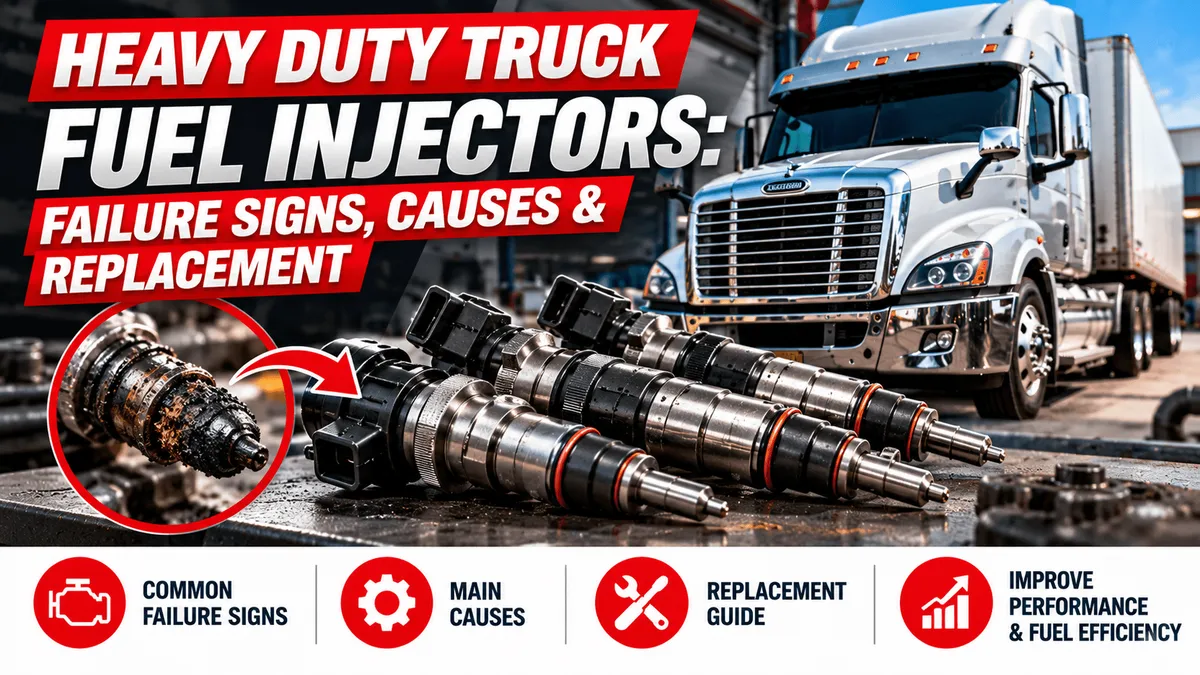
Heavy Duty Truck Fuel Injectors: Failure Signs, Causes, and Replacement
Fuel injectors do one of the most precise jobs on a diesel engine. They deliver a measured amount of fuel, at very high pressure, in a spray pattern fine enough to burn efficiently, thousands of times a minute. When injectors work, nobody thinks about them. When they don't, the symptoms show up everywhere: hard starting, rough running, smoke, poor fuel economy, and lost power.
This guide explains how to recognize a failing injector, what typically causes failure, how shops diagnose the problem, and what to know before replacing one. For fuel filter changes ahead of cold weather, see our winter truck maintenance guide.
Table of Contents
What Fuel Injectors Do
Common Injector Designs
Signs of a Failing Injector
What Causes Injector Failure
How Injector Problems Are Diagnosed
Why Ignoring Injector Problems Gets Expensive
Replacement: What to Know Before You Start
Reducing the Risk of Injector Failure
Choosing Replacement Injectors
Frequently Asked Questions
Final Thoughts
1. What Fuel Injectors Do
In a diesel engine, air is compressed in the cylinder until it's hot enough to ignite fuel injected into it. The injector controls:
How much fuel enters the cylinder
When it enters, relative to piston position
How it's sprayed, since fine atomization burns more completely and cleanly
Modern injectors work at very high pressures and are controlled electronically, which allows precise timing and metering. That precision supports power, fuel economy, and emissions compliance, so small deviations show up quickly.
2. Common Injector Designs
Designs vary by engine manufacturer and generation:
Unit injectors, which combine the pumping and injection functions in one component, typically driven mechanically with electronic control
Common rail injectors, which are fed by a shared high-pressure fuel rail and controlled electronically
Older mechanical injection systems, still found on some older equipment
The design affects how the injector is diagnosed, removed, and installed, so always confirm which system your engine uses before ordering parts.
3. Signs of a Failing Injector
Hard starting or extended cranking, especially when the engine is warm
Rough idle or misfire, where the engine runs unevenly or shakes
Loss of power under load or on hills
Excess smoke, such as black smoke (incomplete combustion) or white smoke (unburned fuel)
Worse fuel economy without another obvious cause
Knocking or unusual combustion noise
Fuel smell or visible leaks around the injector area
Fault codes pointing to a cylinder, injector circuit, or fuel pressure issue
Oil that smells of fuel or rises in level, which can indicate fuel dilution
These symptoms overlap with other problems, such as air restriction, turbocharger issues, and clogged filters, so diagnosis matters before you start replacing parts.
4. What Causes Injector Failure
Contaminated fuel, including dirt, water, or poor-quality fuel, which erodes or clogs fine internal parts
Water in the fuel system, which causes corrosion and wear
Neglected fuel filters, letting contaminants through
Age and mileage, since injectors wear with use
Heat and pressure stress over millions of cycles
Poor fuel handling and storage, particularly old or degraded fuel
Electrical faults, including wiring and connector problems that mimic injector failure
Incorrect installation, such as improper seating or damaged seals
Fuel cleanliness is the single largest factor fleets can control, which is why filter changes and water drainage matter so much.
5. How Injector Problems Are Diagnosed
A good diagnosis separates a failed injector from something that behaves like one. Technicians commonly use:
Scan tool diagnostics to read fault codes and live data
Cylinder contribution or balance tests, which compare how much each cylinder contributes to engine operation
Return flow or leak-off testing, depending on the engine, to detect injectors that leak internally
Fuel pressure and supply checks, to confirm the problem isn't upstream
Visual inspection for external leaks, damaged lines, or wiring faults
Oil and fuel condition checks, looking for dilution or contamination
Procedures vary by engine manufacturer, so follow their service information. A shop should rule out filters, air supply, and electrical causes before condemning injectors.
6. Why Ignoring Injector Problems Gets Expensive
A failing injector rarely stays a small problem:
Fuel dilution of engine oil reduces lubrication and accelerates wear
Damaged pistons or cylinder components can result from severe over-fueling or poor spray patterns
Aftertreatment problems, since unburned fuel and excess soot load the DPF and related systems
Wasted fuel, which adds up quickly across a fleet
Breakdown risk, as a misfire or no-start leaves a truck stranded
Catching and addressing injector problems early is almost always cheaper than dealing with the secondary damage.
7. Replacement: What to Know Before You Start
Injector replacement is precision work, and several details are easy to overlook:
Confirm the correct injector by engine model and serial number, not just truck make and year. Our guide on finding the right truck part explains how.
Cleanliness matters. Dirt entering an open fuel system can ruin new injectors, so keep work areas and parts clean.
Replace seals, washers, and related hardware as specified by the manufacturer
Follow torque specifications and procedures exactly, since improper seating or over-tightening causes leaks and damage
Programming or calibration may be required. Many electronically controlled injectors need trim or calibration codes loaded into the engine control module after installation
Consider replacing injectors as a set where appropriate, since injectors in the same engine have seen similar conditions
Address the root cause, such as contaminated fuel or a failing filter, or new injectors may fail the same way
If you're unsure about any step, a qualified diesel technician should do the work.
8. Reducing the Risk of Injector Failure
Change fuel filters on schedule, and don't stretch intervals
Drain water from fuel/water separators regularly
Buy fuel from reliable sources and avoid old or degraded fuel
Keep fuel tanks in good condition, and address contamination promptly
Address warning lights and symptoms early instead of running a truck that's misfiring
Keep air intake and aftertreatment maintenance current, since related problems can strain the engine
Follow manufacturer service intervals, and keep records so recurring issues stand out
Regular inspection habits, covered in our preventive maintenance guide, catch many of these problems before they reach the injectors.
9. Choosing Replacement Injectors
Match the exact specification for your engine, including model, serial range, and rating
Use reputable sources, since quality varies and a poorly made injector can damage an engine
Ask about warranty coverage, which matters more on high-value components
Confirm what's included (seals, hardware, any required components)
Understand calibration requirements before you order, so installation isn't delayed
Confirm fitment with a supplier who can verify it against your engine data
Gill Truck Parts supplies fuel injectors and related components through our Freightliner OEM line. Call with your engine details and we'll confirm the right match and availability.
10. Frequently Asked Questions
What are the symptoms of a bad diesel fuel injector? Common signs include hard starting, rough idle, loss of power, excess smoke, poor fuel economy, and fault codes. Other problems can look similar, so diagnosis matters.
Can I replace just one injector? Sometimes, but injectors in the same engine have seen similar conditions, so many shops consider replacing in sets. Your technician's diagnosis should guide the decision.
What causes fuel injectors to fail? Contaminated fuel and water are major causes, along with neglected filters, age, and mileage. Electrical and installation faults can also play a part.
Do new injectors need to be programmed? Many electronically controlled injectors require trim or calibration codes loaded into the engine control module. Check the requirements for your engine before ordering.
How do I know it's the injector and not the fuel filter? You often can't tell from symptoms alone, which is why shops check filters and fuel supply before condemning injectors.
Can a bad injector damage my engine? Yes. Over-fueling and poor spray patterns can cause fuel dilution of the oil and damage to pistons and cylinder components, so address symptoms early.
11. Final Thoughts
Fuel injectors are small components with large consequences. Clean fuel, regular filter changes, and prompt attention to symptoms prevent most failures, and when an injector does fail, a proper diagnosis and correct replacement protect the rest of the engine.
Need Fuel System Parts for Your Fleet?
Gill Truck Parts has supplied heavy-duty truck parts to fleets across Mississauga and the Greater Toronto Area for over 15 years. Call us with your engine details to confirm fuel injectors and related parts.
📞 Call us now: 905-564-7710 📍 1295 Shawson Dr, Mississauga, ON L4W 1C4
Related reading: Winter Truck Maintenance in Ontario | How to Find the Right Truck Part | Preventive Maintenance Tips for Semi Trucks