Volvo Truck Parts Guide: Everything You Need to Know About Genuine and Aftermarket Parts
Volvo trucks are recognized worldwide for their durability, fuel efficiency, and advanced engineering. Whether operating regional delivery vehicles, long-haul tractors, or heavy-duty vocational trucks, keeping your Volvo in peak condition depends on using high-quality replacement parts and following a proactive maintenance schedule.
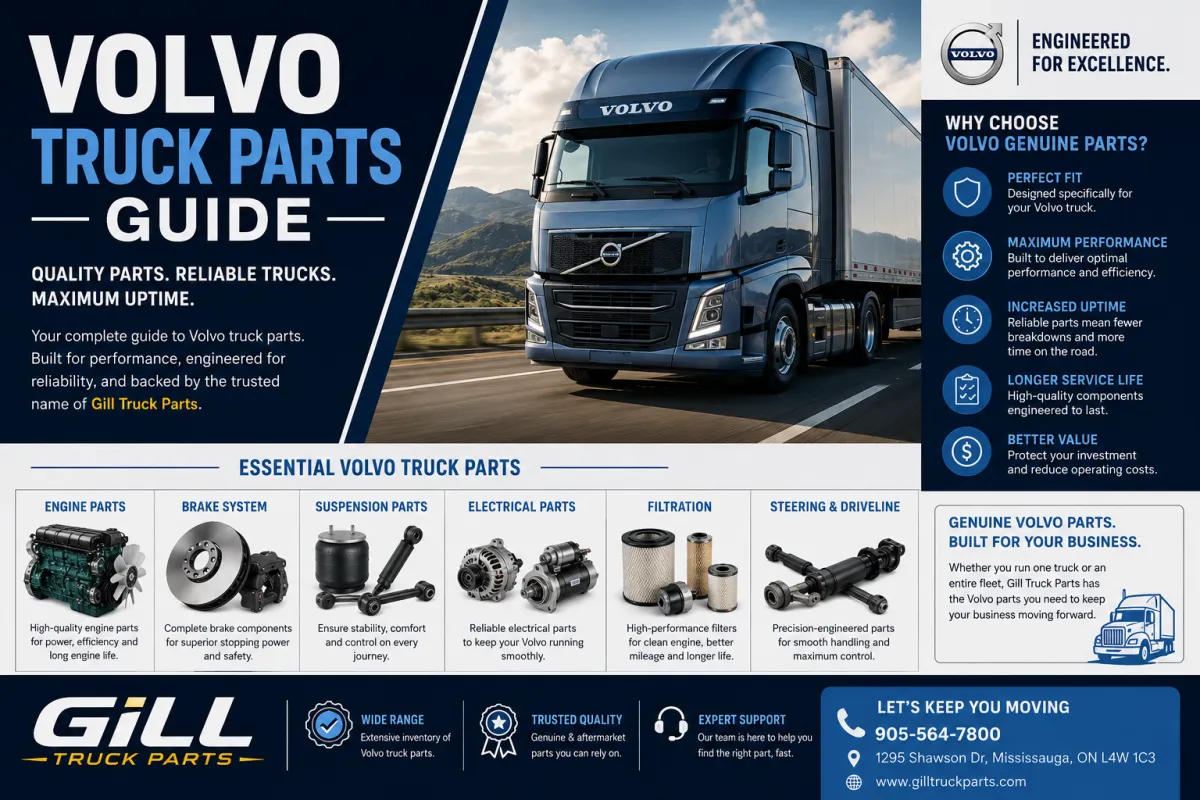
This Volvo Truck Parts Guide covers the essential components found in Volvo trucks, explains how each system works, highlights common signs of wear, and provides practical advice for selecting reliable replacement parts. Whether you're an owner-operator, fleet manager, or repair shop, understanding your truck's components can help reduce downtime, improve safety, and extend vehicle life.
At Gill Truck Parts, we supply a wide range of heavy-duty truck parts for Volvo and other commercial truck brands. From engine and brake components to steering, suspension, and wheel-end parts, we help customers across Canada keep their trucks operating efficiently.
Why Quality Volvo Truck Parts Matter
Every component on a Volvo truck contributes to its overall performance and reliability. Installing quality replacement parts not only restores factory performance but also helps prevent unexpected breakdowns and expensive repairs.
Improve Vehicle Reliability
Reliable truck parts allow your Volvo to perform consistently under demanding conditions. High-quality components reduce the risk of premature failure and help maintain dependable operation throughout the vehicle's service life.
Benefits include:
Consistent performance
Fewer roadside breakdowns
Improved fleet productivity
Longer component lifespan
Increase Driver Safety
Critical systems such as brakes, steering, suspension, and lighting rely on properly functioning components to ensure safe vehicle operation.
Replacing worn parts promptly helps:
Maintain steering control
Improve braking performance
Enhance vehicle stability
Reduce accident risks
Improve visibility during nighttime driving
Reduce Maintenance Costs
While quality replacement parts may require a slightly higher initial investment, they often reduce long-term operating costs by lasting longer and minimizing repeat repairs.
Advantages include:
Lower repair frequency
Reduced labor costs
Less vehicle downtime
Improved return on investment
Extend Truck Lifespan
Routine maintenance combined with premium replacement parts allows Volvo trucks to remain productive for hundreds of thousands of kilometers.
Preventive maintenance protects major systems from excessive wear while preserving the truck's resale value.
Minimize Fleet Downtime
Every hour a commercial truck is off the road represents lost revenue. Using dependable replacement parts and replacing worn components before failure helps maximize uptime and improve fleet efficiency.
Understanding Volvo Truck Systems
A Volvo truck consists of several integrated systems that work together to deliver reliable performance. Understanding these systems makes it easier to diagnose issues and schedule preventive maintenance.
Engine System
The engine is the heart of every Volvo truck. Modern Volvo diesel engines are designed for fuel efficiency, low emissions, and high torque output.
Major engine components include:
Air filters
Oil filters
Fuel filters
Turbochargers
Fuel injectors
Water pumps
Radiators
Belts
Sensors
Cooling components
Routine maintenance of these components improves engine performance and extends service life.
Transmission and Drivetrain
The transmission transfers engine power to the drive wheels while optimizing fuel efficiency and performance.
Important drivetrain components include:
Clutch assemblies
Transmission gears
Driveshafts
Universal joints
Differentials
Axle shafts
Proper lubrication and routine inspections help reduce drivetrain wear.
Brake System
Volvo trucks rely on advanced air brake systems to safely stop heavy loads.
The braking system typically includes:
Brake pads
Brake rotors
Brake drums
Brake chambers
Slack adjusters
Air compressors
Air valves
Brake hoses
Regular brake inspections are essential for maintaining vehicle safety and complying with commercial vehicle regulations.
Steering System
The steering system enables precise vehicle control while reducing driver effort.
Key steering components include:
Steering gearbox
Steering shaft
Tie rod ends
Drag links
Pitman arm
Power steering pump
Hydraulic hoses
Routine inspections help identify wear before steering performance is affected.
Suspension System
The suspension absorbs road impacts, supports heavy loads, and improves ride comfort.
Common suspension components include:
Air springs
Leaf springs
Shock absorbers
Torque rods
Bushings
Suspension brackets
A properly maintained suspension system improves tire life, vehicle stability, and driver comfort.
Electrical System
Modern Volvo trucks rely on sophisticated electrical systems to control engine performance, safety features, lighting, and driver information systems.
Key electrical components include:
Alternators
Starters
Batteries
Wiring harnesses
Control modules
Sensors
LED lighting
Faulty electrical components can affect multiple vehicle systems, making prompt diagnosis essential.
Cooling System
The cooling system regulates engine temperature and prevents overheating.
Major cooling system components include:
Radiator
Water pump
Cooling fan
Thermostat
Coolant reservoir
Hoses
Routine coolant inspections and leak checks help protect the engine from expensive damage.
Air System
Compressed air powers several important systems on Volvo trucks, including braking and suspension.
Major air system components include:
Air compressor
Air dryer
Air tanks
Air valves
Air lines
Pressure regulators
Keeping the air system in good condition improves braking performance and overall vehicle reliability.
Essential Volvo Truck Parts
Understanding the purpose of each replacement part helps truck owners make informed maintenance decisions.
Engine Components
The engine contains numerous wear items that require routine inspection and replacement. Proper engine maintenance improves fuel economy, reduces emissions, and extends engine life.
Air Filters
Air filters prevent dust, dirt, and debris from entering the engine. A clean air filter promotes efficient combustion and protects internal engine components from premature wear.
Signs an Air Filter Needs Replacement
Reduced engine performance
Poor fuel economy
Increased exhaust smoke
Dirty or clogged filter element
Replacing the air filter at the recommended service interval helps maintain optimal engine efficiency.
Oil Filters
Oil filters remove contaminants from engine oil, ensuring proper lubrication of moving engine parts.
Benefits of a Clean Oil Filter
Improved engine protection
Reduced internal wear
Better oil circulation
Longer engine life
Oil filters should always be replaced during scheduled oil changes.
Fuel Filters
Fuel filters prevent dirt, rust, and contaminants from entering the fuel injection system.
Symptoms of a Dirty Fuel Filter
Hard starting
Loss of engine power
Poor acceleration
Increased fuel consumption
Rough engine operation
Replacing clogged fuel filters helps maintain proper fuel delivery and engine performance.
Turbochargers
Turbochargers increase engine power by forcing additional air into the combustion chamber, improving efficiency and torque.
Signs of Turbocharger Problems
Loss of engine power
Excessive exhaust smoke
High oil consumption
Whining or unusual noises
Reduced fuel efficiency
Routine inspections and proper lubrication help extend turbocharger life.
Water Pumps
The water pump circulates coolant throughout the engine, helping maintain the proper operating temperature.
Common Signs of Water Pump Failure
Coolant leaks
Engine overheating
Grinding noises
Steam from the engine compartment
Low coolant level
A failing water pump should be replaced immediately to prevent severe engine damage.
Belts and Tensioners
Belts drive essential engine accessories such as the alternator, water pump, and air conditioning compressor, while tensioners maintain proper belt tension.
Warning Signs of Belt Wear
Cracks or fraying
Squealing noises
Slipping belts
Visible glazing
Loose belt tension
Routine inspection helps prevent unexpected belt failures.
Radiators
The radiator removes excess engine heat by transferring it to the surrounding air.
Signs of Radiator Problems
Coolant leaks
Engine overheating
Corrosion
Damaged cooling fins
Low coolant levels
Maintaining a clean and leak-free radiator helps ensure reliable engine cooling and prevents costly repairs.
Essential Volvo Truck Parts
Maintaining every major system on your Volvo truck is essential for maximizing uptime, improving safety, and reducing long-term operating costs. The following components experience regular wear and should be inspected as part of a preventive maintenance program.
Brake Components
A dependable braking system is one of the most important safety features on any commercial truck. Volvo trucks use advanced air brake systems designed to deliver consistent stopping power under heavy loads.
Brake Pads
Brake pads create the friction needed to slow and stop the vehicle.
Signs Brake Pads Need Replacement
Squealing or grinding noises
Reduced braking performance
Increased stopping distance
Uneven brake wear
Replacing worn brake pads before they wear completely helps protect brake rotors and improves overall braking efficiency.
Brake Rotors
Brake rotors work with brake pads to generate stopping force.
Common Rotor Problems
Deep grooves
Excessive heat spots
Cracks
Warping
Uneven wear
Damaged rotors can reduce braking efficiency and should be resurfaced or replaced when necessary.
Brake Drums
Many heavy-duty Volvo trucks use brake drums on specific axle configurations.
Signs of Brake Drum Wear
Cracks
Excessive inside diameter
Heat damage
Uneven braking
Routine inspections help maintain safe braking performance.
Brake Chambers
Brake chambers convert compressed air into mechanical force.
Common Brake Chamber Issues
Air leaks
Corrosion
Damaged diaphragms
Slow brake response
Faulty brake chambers should be replaced immediately to maintain braking safety.
Slack Adjusters
Slack adjusters maintain proper brake adjustment and ensure consistent braking performance.
Symptoms of Worn Slack Adjusters
Excessive brake stroke
Uneven braking
Poor brake response
Brake inspection failures
Automatic slack adjusters should still be inspected regularly for proper operation.
Air Compressors
The air compressor supplies compressed air to the braking system.
Warning Signs of Air Compressor Failure
Low air pressure
Slow air build-up
Excessive oil carryover
Unusual compressor noise
A properly functioning air compressor is essential for safe commercial vehicle operation.
Suspension Components
The suspension system absorbs road impacts, supports heavy loads, and improves ride quality.
Shock Absorbers
Shock absorbers control suspension movement and reduce bouncing.
Signs of Worn Shock Absorbers
Excessive bouncing
Uneven tire wear
Poor handling
Increased stopping distance
Air Springs
Air springs provide a smoother ride while maintaining consistent ride height.
Common Air Spring Problems
Air leaks
Cracked rubber
Sagging suspension
Uneven vehicle height
Leaf Springs
Leaf springs provide structural support and distribute vehicle weight.
Signs of Leaf Spring Damage
Broken leaves
Rust
Vehicle leaning
Reduced load capacity
Torque Rods
Torque rods stabilize the axle and maintain proper suspension geometry.
Symptoms of Torque Rod Wear
Loose handling
Excessive axle movement
Uneven tire wear
Suspension vibration
Suspension Bushings
Bushings absorb vibration while allowing controlled suspension movement.
Signs Bushings Need Replacement
Cracked rubber
Clunking noises
Excessive movement
Uneven alignment
Steering Components
A responsive steering system improves vehicle control and reduces driver fatigue during long trips.
Steering Gear Box
The steering gearbox converts steering wheel movement into wheel movement.
Common Signs of Steering Gear Box Failure
Loose steering
Fluid leaks
Steering vibration
Hard steering
Tie Rod Ends
Tie rod ends connect steering linkage to the steering knuckles.
Symptoms of Worn Tie Rod Ends
Excessive steering play
Uneven tire wear
Clunking noises
Poor wheel alignment
Drag Links
Drag links transfer steering movement throughout the steering linkage.
Signs of Drag Link Wear
Wandering steering
Steering looseness
Uneven tire wear
Reduced steering precision
Pitman Arms
Pitman arms transfer steering gearbox movement to the linkage.
Symptoms of a Worn Pitman Arm
Loose steering
Knocking noises
Vehicle drifting
Steering instability
Steering Shafts
Steering shafts connect the steering wheel to the steering gearbox.
Signs of Steering Shaft Problems
Steering vibration
Excessive free play
Clicking noises
Difficult steering
Wheel-End Components
Wheel-end components support vehicle weight while allowing smooth wheel rotation.
Wheel Bearings
Wheel bearings reduce friction and support the rotating wheel hub.
Symptoms of Bearing Failure
Grinding noises
Hub overheating
Wheel vibration
Excessive wheel movement
Hub Assemblies
Hub assemblies house the wheel bearings and support the wheel.
Common Hub Problems
Bearing wear
Seal failure
Corrosion
Excessive movement
Wheel Seals
Wheel seals keep lubricant inside the hub while preventing contamination.
Signs of Seal Failure
Grease leaks
Oil contamination
Bearing damage
Hub overheating
Wheel Studs
Wheel studs secure the wheel to the hub.
Common Issues
Damaged threads
Corrosion
Bent studs
Loose wheel installation
Wheel studs should always be inspected whenever wheels are removed.
Electrical Components
Modern Volvo trucks rely heavily on electronic systems for performance, diagnostics, and safety.
Alternators
Alternators recharge the battery while supplying electrical power to the vehicle.
Signs of Alternator Failure
Battery warning light
Weak electrical accessories
Low charging voltage
Dead battery
Starters
Starters crank the engine during startup.
Symptoms of Starter Problems
Clicking noises
Slow engine cranking
Failure to start
Intermittent starting issues
Batteries
Commercial truck batteries provide power for starting and electrical systems.
Battery Warning Signs
Slow cranking
Corroded terminals
Swollen battery case
Low voltage
Sensors
Electronic sensors monitor engine and vehicle performance.
Common Sensor Failures
Check engine light
Poor fuel economy
Reduced engine performance
Incorrect dashboard readings
Wiring Harnesses
Wiring harnesses connect electronic systems throughout the truck.
Signs of Wiring Problems
Electrical shorts
Blown fuses
Intermittent faults
Corroded connectors
Cooling System Components
Maintaining the cooling system helps prevent overheating and expensive engine damage.
Radiators
Radiators remove heat from engine coolant.
Signs of Radiator Failure
Coolant leaks
Engine overheating
Blocked cooling fins
Corrosion
Cooling Fans
Cooling fans improve airflow through the radiator.
Common Cooling Fan Problems
Fan motor failure
Broken blades
Excessive vibration
Poor airflow
Thermostats
Thermostats regulate coolant flow based on engine temperature.
Signs of a Faulty Thermostat
Engine overheating
Engine running too cool
Fluctuating temperature gauge
Poor heater performance
Coolant Reservoirs
Coolant reservoirs store excess coolant as temperatures change.
Common Problems
Cracks
Leaks
Low coolant level
Damaged caps
Genuine Volvo Parts vs. Aftermarket Parts
One of the most common questions truck owners ask is whether to choose genuine Volvo parts or premium aftermarket replacements.
Benefits of Genuine Volvo Parts
Genuine Volvo parts are manufactured to the original equipment specifications and are engineered specifically for Volvo trucks.
Advantages include:
Exact fit and compatibility
Factory-tested quality
Consistent performance
Manufacturer-backed engineering
Reliable long-term durability
These parts are often preferred for newer vehicles or fleets operating under manufacturer maintenance programs.
Benefits of Premium Aftermarket Parts
High-quality aftermarket parts provide an excellent balance of performance and value.
Benefits include:
Lower replacement costs
Broad product availability
Excellent reliability
Competitive warranties
Options that meet or exceed OEM standards
Purchasing aftermarket components from a trusted supplier helps ensure quality and long-term performance.
OEM vs. Aftermarket Comparison
Both options can provide dependable results when sourced from a reputable heavy-duty truck parts supplier. The right choice depends on your maintenance strategy, budget, and vehicle requirements.
Common Signs Volvo Truck Parts Need Replacement
Even the highest-quality truck components eventually wear out. Identifying early warning signs allows you to schedule repairs before a minor issue turns into an expensive breakdown.
Reduced Engine Performance
A noticeable loss of power, sluggish acceleration, or poor fuel economy often indicates worn engine components such as clogged air filters, dirty fuel filters, failing injectors, or a worn turbocharger.
What to Check
Air filter condition
Fuel filter restriction
Turbocharger performance
Fuel injector operation
Engine warning lights
Prompt diagnosis helps restore engine efficiency and prevent further damage.
Brake Noise
Squealing, grinding, or unusual brake noises usually indicate worn brake pads, damaged rotors, or brake system issues.
Common Causes
Worn brake pads
Damaged brake rotors
Loose brake hardware
Brake drum wear
Brake chamber problems
Ignoring brake noise can reduce stopping performance and increase repair costs.
Loose Steering or Steering Play
If your Volvo truck feels difficult to control or requires constant steering corrections, worn steering components may be the cause.
Components to Inspect
Steering gearbox
Tie rod ends
Drag links
Pitman arm
Steering shaft
Routine inspections help maintain safe handling and improve driver confidence.
Suspension Vibration
Excessive vibration or an unstable ride often points to worn suspension components.
Possible Causes
Worn shock absorbers
Damaged air springs
Loose suspension bushings
Worn torque rods
Broken leaf springs
Replacing worn suspension parts improves ride quality, protects cargo, and reduces tire wear.
Cooling System Leaks
Coolant leaks should never be ignored because they can quickly lead to engine overheating.
Common Leak Locations
Radiator
Water pump
Coolant hoses
Thermostat housing
Coolant reservoir
Maintaining the cooling system helps prevent costly engine repairs.
Dashboard Warning Lights
Modern Volvo trucks continuously monitor vehicle systems using onboard diagnostics. Warning lights should always be investigated promptly.
Common warning indicators include:
Check Engine Light
ABS Warning Light
Battery Warning Light
Low Air Pressure Warning
Coolant Temperature Warning
Electronic diagnostics can quickly identify the source of many problems before they become more serious.
Uneven Tire Wear
Uneven tire wear often indicates problems with steering, suspension, or wheel-end components.
Common causes include:
Wheel misalignment
Worn tie rod ends
Damaged wheel bearings
Suspension wear
Incorrect tire pressure
Correcting these issues early extends tire life and improves fuel efficiency.
Preventive Maintenance Tips for Volvo Trucks
Routine maintenance is the most effective way to maximize truck reliability and reduce operating costs.
Follow the Manufacturer's Maintenance Schedule
Regular service intervals help identify worn components before they fail.
Recommended inspections include:
Engine oil and filters
Air filters
Fuel filters
Brake system
Steering system
Suspension components
Cooling system
Electrical system
Monitor Fluid Levels
Inspect fluid levels frequently, including:
Engine oil
Coolant
Power steering fluid
Transmission fluid
Differential oil
Brake system air supply
Clean fluids help protect critical truck systems from premature wear.
Replace Filters on Schedule
Clean filters improve engine performance and protect expensive components.
Replace:
Air filters
Oil filters
Fuel filters
Cabin air filters
Air dryer cartridges
Following recommended replacement intervals helps maintain fuel efficiency and reduce engine wear.
Inspect Belts and Hoses
Belts and hoses are exposed to heat, vibration, and constant use.
Inspect for:
Cracks
Fraying
Leaks
Loose clamps
Swelling
Replacing worn belts and hoses before failure prevents unexpected downtime.
Check Steering and Suspension Components
Steering and suspension systems should be inspected during every preventive maintenance service.
Look for:
Loose tie rod ends
Worn bushings
Damaged shocks
Air spring leaks
Steering gearbox leaks
Early replacement helps maintain safe vehicle handling.
Perform Regular Wheel Alignments
Proper wheel alignment:
Improves steering response
Reduces tire wear
Increases fuel efficiency
Extends suspension life
Alignment should be checked whenever steering or suspension components are replaced.
How to Choose the Right Volvo Truck Parts
Selecting the correct replacement parts helps maximize reliability and reduce maintenance costs.
Verify Vehicle Compatibility
Always confirm the truck's:
Model
Year
VIN
Engine type
Component specifications
Using the correct part ensures proper fit and reliable performance.
Choose Quality Components
Look for replacement parts manufactured to meet or exceed original equipment specifications.
Quality parts generally provide:
Better durability
Longer service life
Improved reliability
Consistent performance
Buy From a Trusted Supplier
An experienced heavy-duty truck parts supplier can help identify the correct parts while providing expert technical support and dependable product availability.
Consider Warranty Coverage
Warranty protection provides additional confidence and demonstrates the manufacturer's commitment to product quality.
Why Buy Volvo Truck Parts from Gill Truck Parts?
Gill Truck Parts is committed to supplying dependable replacement parts for commercial trucks across Canada.
Extensive Inventory
Our inventory includes:
Engine components
Brake parts
Steering components
Suspension parts
Cooling system parts
Electrical components
Air system components
Trusted Quality
We supply reliable replacement parts designed to deliver dependable performance in demanding commercial applications.
Expert Customer Support
Our experienced team helps customers identify compatible replacement parts, ensuring accurate ordering and efficient repairs.
Fast Availability
We understand that downtime affects your business. Our goal is to provide prompt access to the heavy-duty truck parts you need to get back on the road quickly.
Frequently Asked Questions
Are aftermarket Volvo truck parts reliable?
Yes. Premium aftermarket parts from reputable manufacturers are designed to meet or exceed OEM specifications and are widely used by commercial fleets and independent repair shops.
How often should Volvo truck parts be replaced?
Replacement intervals vary depending on the component, operating conditions, and maintenance practices. Regular inspections are the best way to determine when parts should be replaced.
Can I use aftermarket parts without affecting truck performance?
High-quality aftermarket components that meet OEM specifications can provide reliable performance while offering a cost-effective alternative to genuine parts.
How do I identify the correct Volvo truck part?
The most accurate method is to provide your truck's VIN, model, year, engine type, or original part number when ordering replacement parts.
What are the most commonly replaced Volvo truck parts?
Common replacement items include:
Oil filters
Fuel filters
Brake pads
Brake rotors
Air springs
Tie rod ends
Wheel bearings
Hoses
Batteries
Where can I buy quality Volvo truck parts in Canada?
Gill Truck Parts offers a wide selection of heavy-duty truck parts for Volvo and other commercial truck brands. Our knowledgeable team can help you find compatible replacement components for your maintenance and repair needs.
Conclusion
Keeping your Volvo truck in peak operating condition requires more than routine servicing—it requires high-quality replacement parts, timely inspections, and a proactive maintenance strategy. From engine and brake components to steering, suspension, wheel-end, cooling, electrical, and air system parts, every component plays a vital role in maintaining vehicle safety, performance, and reliability.
By recognizing early signs of wear, following a preventive maintenance schedule, and choosing dependable replacement parts, you can reduce unexpected breakdowns, lower operating costs, and maximize fleet uptime.
Whether you're maintaining a single truck or managing an entire fleet, investing in quality Volvo truck parts is one of the most effective ways to protect your equipment and keep your business moving. At Gill Truck Parts, we're proud to support owner-operators, fleet managers, and repair facilities with reliable heavy-duty truck parts, expert guidance, and dependable customer service across Canada.
Whether you need filters, brake components, steering parts, suspension components, cooling system parts, or wheel-end assemblies, our team is ready to help you find the right solution for your Volvo truck.