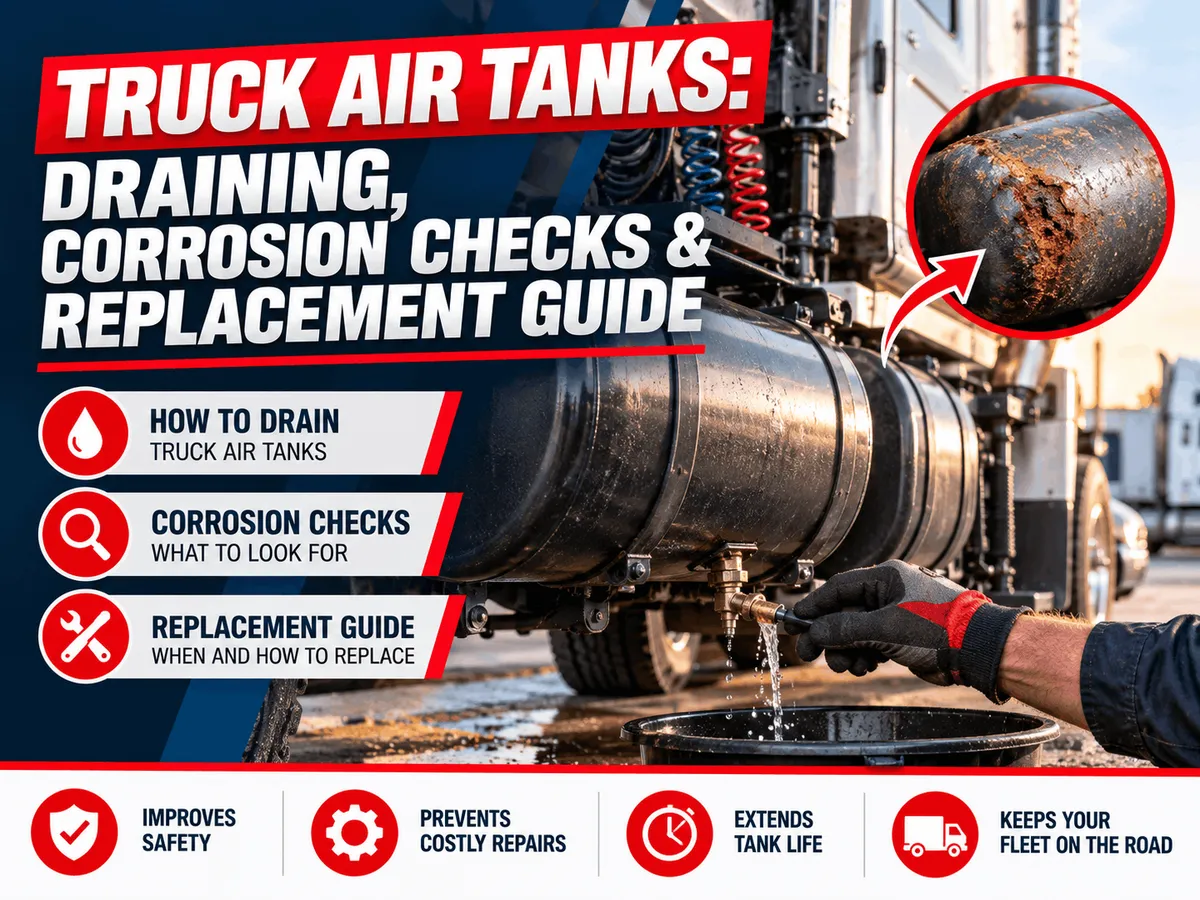
Truck Air Tanks: How They Work, How They Fail, and When to Replace Them
Air tanks are the quiet workhorses of a heavy-duty air system. They store the compressed air that brakes, suspension, and other air-powered systems depend on, and they do it for years without asking for much attention. That's exactly why they get neglected. A tank full of moisture and rust looks identical from the outside to a healthy one, until it leaks, contaminates the system, or fails.
This guide focuses on the tanks themselves: what they do, how moisture and corrosion damage them, how to drain and inspect them, and when replacement makes sense. For the wider brake system, see our air brake parts guide.
Table of Contents
What Does an Air Tank Do?
Types of Air Tanks on a Truck
Why Moisture Is the Enemy
How Air Tanks Fail
Signs of a Problem
Draining Air Tanks Correctly
Inspecting Air Tanks
Repair vs. Replacement
Choosing a Replacement Air Tank
Frequently Asked Questions
Final Thoughts
1. What Does an Air Tank Do?
The air compressor builds pressure, and air tanks (also called reservoirs) store it. Stored air does several jobs:
Provides a reserve so brakes can be applied repeatedly without the compressor having to supply every application instantly
Smooths pressure so the system doesn't fluctuate with each demand
Allows moisture and contaminants to settle out, so they can be drained rather than reaching valves and brake components
Supports other air systems, such as air suspension, depending on the truck's configuration
Without adequate, healthy storage, an air system can't deliver reliable pressure when the driver needs it.
2. Types of Air Tanks on a Truck
Most air systems use more than one tank, each with a role:
Supply (wet) tank. The first tank air enters from the compressor, where most moisture and oil collect. It's the tank most likely to accumulate contaminants.
Primary and secondary (service) tanks. These supply the brake circuits and are kept separate so one circuit can still work if the other loses pressure.
Auxiliary and accessory tanks. Some trucks have extra tanks for suspension or other air-operated equipment.
Trailer tanks. Trailers carry their own reservoirs for the trailer brakes.
Tank layout varies by truck and trailer, so always confirm the configuration before ordering parts.
3. Why Moisture Is the Enemy
Compressed air carries water vapour. As air cools in the tank, that vapour condenses into liquid, along with traces of compressor oil. An air dryer removes most of it before the air reaches the tanks, but no dryer is perfect, and a failing dryer lets a lot more through.
Accumulated moisture causes problems in several ways:
Internal corrosion. Water sitting at the bottom of the tank rusts it from the inside out, thinning the wall where you can't see it
Contamination downstream. Rust flakes, water, and oil can reach valves and brake components
Freezing in cold weather, which can block lines and valves (see our winter truck maintenance guide)
Oil contamination when a worn compressor passes excess oil into the system
This is why tank condition and air dryer condition go hand in hand. A neglected dryer shortens the life of every tank downstream.
4. How Air Tanks Fail
Internal corrosion thinning the tank wall over time
External corrosion from road salt, water, and debris, particularly along the bottom and around mounting straps
Drain valve failure, either stuck closed (so moisture can't be drained) or leaking
Damaged or leaking fittings and ports
Physical damage from road debris, impact, or improper mounting
Strap and bracket failure, letting the tank shift or rub
Ontario's road salt makes external corrosion a particular concern, so tanks deserve a closer look here than they might in a drier climate.
5. Signs of a Problem
Water or oily sludge when draining, especially in large amounts
Rust-coloured discharge from the drain valve
Air pressure that drops faster than normal with the engine off, which may point to leaks at the tank, fittings, or elsewhere
Compressor cycling more often as it compensates for leaks
Visible rust, flaking paint, pitting, or bulging on the tank surface
Hissing around fittings or the drain valve
Corroded or loose mounting straps
A single symptom doesn't pinpoint the tank, since leaks can come from many places in an air system. Treat these as reasons to inspect.
6. Draining Air Tanks Correctly
Regular draining removes the moisture and contaminants that cause most tank damage.
Follow your fleet's drain schedule and the manufacturer's guidance. Many fleets drain daily or at regular intervals, and more often in humid or cold conditions
Drain every tank, starting with the supply (wet) tank where moisture collects most
Do it with the truck safely secured, and follow your shop's safety procedures, since compressed air discharge can throw debris
Watch what comes out. A little moisture is normal, but a lot of water, oil, or rust deserves investigation
Check that drain valves open and close properly, and replace any that stick or leak
If your truck has automatic drain valves, confirm they're functioning, because they're not a substitute for inspecting the tanks
If you drain a tank and find heavy moisture every time, look at the air dryer and the compressor rather than just draining more often.
7. Inspecting Air Tanks
During regular inspections, look at:
The tank body for rust, pitting, dents, bulges, or flaking
The bottom surface and seams, where moisture collects
Mounting straps and brackets for corrosion, cracks, and looseness
Fittings, ports, and drain valves for leaks, damage, or corrosion
Surrounding lines for chafing against the tank or brackets
Tags and markings, which should remain readable
If you find significant corrosion, treat it seriously. A tank that's been weakened internally can't be judged by outward appearance alone.
8. Repair vs. Replacement
Air tanks are pressure vessels, so condition matters. In general, tanks with significant corrosion, pitting, damage, or leaks are replaced rather than repaired, and tanks shouldn't be modified or welded.
Replace tanks with serious corrosion, wall damage, dents, bulges, or persistent leaks
Replace drain valves and fittings that are damaged or worn, which is often a small repair that prevents a bigger one
Replace mounting straps that are corroded or cracked
Follow applicable regulations and manufacturer requirements for inspection and replacement, and have a qualified technician make the call when you're unsure
If you're deciding whether a tank is serviceable, a qualified technician's judgment is the right authority, not a guess from the outside.
9. Choosing a Replacement Air Tank
Match size and capacity to the original specification
Confirm port configuration, including number, size, and position
Check the mounting style so the replacement fits the same brackets and straps
Use quality construction from a reputable manufacturer, built for heavy-duty service
Replace associated hardware such as drain valves, fittings, and straps at the same time where appropriate
Confirm fitment by make, model, and year with a supplier who can verify it
Gill Truck Parts supplies Dayton Parts air tanks and related air system components for fleets across the GTA. Call with your truck details if you're unsure which tank configuration you have.
10. Frequently Asked Questions
What does an air tank do on a truck? It stores compressed air from the compressor so brakes and other air systems have a reserve, and it lets moisture settle out so it can be drained.
How often should I drain truck air tanks? Follow your fleet's schedule and the manufacturer's guidance. Many fleets drain regularly, and more often in humid or cold conditions.
Why is there so much water in my air tanks? Excess moisture usually points to a failing air dryer or an issue upstream, such as a worn compressor. Draining treats the symptom, so check the dryer too.
Can a rusty air tank be repaired? Generally, tanks with significant corrosion or damage are replaced rather than repaired, and shouldn't be modified or welded. Have a qualified technician assess any tank you're unsure about.
What's the difference between a wet tank and a dry tank? The wet (supply) tank receives air first and collects most moisture and oil. Dry tanks supply the brake circuits with air that has already been conditioned.
How do I know if my air tank is leaking? Signs include air pressure dropping faster than normal with the engine off, hissing at fittings, and the compressor cycling more often. A technician can trace the leak.
11. Final Thoughts
Air tanks don't ask for much, but they pay back regular attention. Draining on schedule, watching what comes out, checking the air dryer, and inspecting for corrosion catches most problems while they're still small and cheap. And when a tank is past serving, replacing it promptly keeps the rest of the air system clean and your brakes reliable.
Need Air Tanks or Air System Parts?
Gill Truck Parts has supplied heavy-duty truck parts to fleets across Mississauga and the Greater Toronto Area for over 15 years. Call us to confirm the right air tank, drain valves, and fittings for your truck.
📞 Call us now: 905-564-7710 📍 1295 Shawson Dr, Mississauga, ON L4W 1C4
Related reading: Air Brake Parts for Commercial Trucks | Winter Truck Maintenance in Ontario | Brake Drums vs. Disc Rotors