Signs Your Truck Brake Drums Need Replacement
Heavy duty trucks travel thousands of kilometers every month across Canadian highways, construction sites, and industrial routes. Because of this, the braking system experiences constant pressure and wear. One of the most important components in that system is the truck brake drum.
Ignoring damaged or worn brake drums can lead to poor braking performance, expensive repairs, and serious safety risks. For fleet owners, owner-operators, and trucking companies, understanding the signs of truck brake drum problems can help prevent downtime and improve road safety.
In this guide, you will learn how to identify worn truck brake drums, what causes brake drum damage, when to replace them, and how to choose reliable heavy duty brake parts in Canada.
Table of Contents
What Are Truck Brake Drums?
Why Brake Drum Maintenance Matters
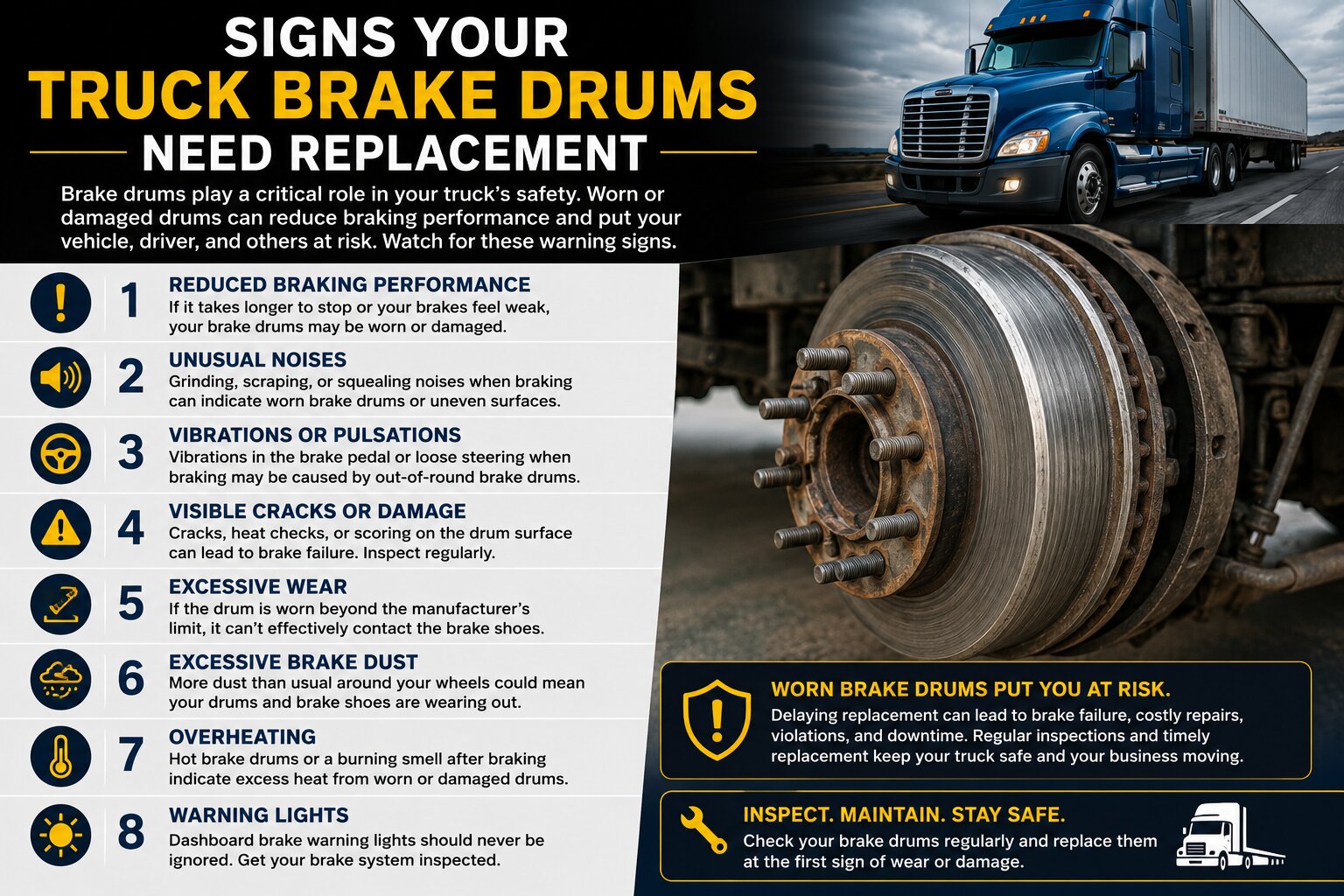
Common Signs Your Truck Brake Drums Need Replacement
What Causes Brake Drum Damage?
How Often Should Brake Drums Be Replaced?
Brake Drum Inspection Checklist
OEM vs Aftermarket Truck Brake Drums
Why Canadian Weather Impacts Brake Performance
Best Practices to Extend Brake Drum Life
Choosing the Right Heavy Duty Brake Parts
Cost of Replacing Truck Brake Drums in Canada
Frequently Asked Questions
Final Thoughts
What Are Truck Brake Drums?
Truck brake drums are circular metal components connected to the wheel assembly. When the driver presses the brake pedal, brake shoes press against the inside of the drum to create friction and slow the vehicle.
Brake drums are commonly used in:
Semi trucks
Commercial trucks
Trailers
Construction vehicles
Heavy duty fleet vehicles
Because these vehicles carry heavy loads, brake drums experience intense heat and pressure daily.
Without proper maintenance, brake drums can wear down faster and reduce braking efficiency.
Why Brake Drum Maintenance Matters
Truck brake maintenance is not just about preventing repairs. It is about protecting drivers, cargo, and other vehicles on the road.
Faulty brake drums can lead to:
Reduced stopping power
Brake overheating
Uneven braking
Tire wear
Brake failure
Increased fuel consumption
According to road safety reports, brake-related issues remain one of the leading causes of heavy truck accidents in North America.
Routine inspections and timely replacement of heavy duty brake drums help prevent these risks while improving overall fleet performance.
Common Signs Your Truck Brake Drums Need Replacement
Understanding early warning signs can save thousands of dollars in repair costs.
1. Vibrations While Braking
If you notice vibrations or shaking when applying the brakes, the brake drum may be warped or unevenly worn.
This issue becomes more noticeable when:
Driving downhill
Carrying heavy loads
Braking at high speeds
Warped brake drums reduce contact between the brake shoes and drum surface, causing inconsistent braking.
2. Grinding or Squealing Noises
Strange sounds are one of the most common indicators of brake drum wear.
You may hear:
Grinding noises
Metal scraping
High-pitched squealing
These sounds usually happen when brake shoes wear down and metal components begin rubbing together.
Ignoring these noises can damage other brake system parts.
3. Reduced Braking Performance
If your truck takes longer to stop than usual, worn brake drums may be affecting braking efficiency.
Common symptoms include:
Delayed stopping
Soft brake pedal
Reduced brake response
Difficulty controlling the truck during sudden stops
This is especially dangerous during Canadian winters when roads are icy and slippery.
4. Visible Cracks on the Brake Drum
Brake drums can crack because of excessive heat and stress.
Small cracks may seem harmless at first, but they can grow quickly under heavy loads.
A cracked brake drum should be replaced immediately to avoid brake failure.
5. Overheating Brakes
Excessive heat buildup often points to brake drum issues.
Signs of overheating include:
Burning smell
Smoke near wheels
Discolored drum surface
Overheated brake drums lose effectiveness and wear out faster.
6. Uneven Brake Wear
Uneven wear patterns usually indicate:
Drum imbalance
Poor installation
Brake shoe alignment issues
This can affect handling and increase maintenance costs.
7. Pulling to One Side While Braking
If your truck pulls left or right during braking, one brake drum may be wearing unevenly.
This creates inconsistent braking pressure and can become dangerous on highways.
What Causes Brake Drum Damage?
Several factors contribute to brake drum wear and failure.
Heavy Loads
Commercial trucks often carry massive loads that create extra pressure on the braking system.
More weight means more heat and friction.
Poor Driving Habits
Aggressive braking and sudden stops increase brake drum wear significantly.
Smooth braking extends the life of heavy duty brake components.
Harsh Canadian Weather
Snow, road salt, ice, and moisture can speed up corrosion and rust formation.
This is especially common in:
Ontario
Alberta
British Columbia
Quebec
Lack of Maintenance
Ignoring routine brake inspections allows small issues to become major repairs.
Regular maintenance helps detect problems early.
How Often Should Brake Drums Be Replaced?
Replacement intervals vary depending on:
Driving conditions
Cargo weight
Mileage
Terrain
Driving style
However, most heavy duty truck brake drums should be inspected every 20,000 to 30,000 kilometers.
Fleet vehicles operating under extreme conditions may require more frequent inspections.
Brake Drum Inspection Checklist
Routine inspections help avoid costly downtime.
Check for:
Cracks
Heat spots
Rust
Uneven wear
Brake shoe damage
Drum thickness
Loose hardware
Professional inspections are highly recommended for commercial fleets.
OEM vs Aftermarket Truck Brake Drums
Choosing between OEM and aftermarket brake drums depends on budget and performance needs.
Reliable aftermarket brands can offer excellent durability and value when sourced from trusted suppliers.
Why Canadian Weather Impacts Brake Performance
Canadian climate conditions create unique challenges for truck brake systems.
Winter Conditions
Cold temperatures affect braking efficiency because:
Ice reduces traction
Moisture causes rust
Road salt accelerates corrosion
Mountain Driving
Truck drivers operating in mountainous regions experience:
Constant downhill braking
Heat buildup
Increased brake wear
Using high-quality heavy duty brake drums is critical in these environments.
Best Practices to Extend Brake Drum Life
Preventive maintenance can significantly improve brake performance.
1. Avoid Aggressive Braking
Smooth driving reduces heat buildup and friction.
2. Schedule Routine Inspections
Regular maintenance prevents small issues from becoming expensive failures.
3. Replace Brake Shoes on Time
Worn brake shoes damage brake drums quickly.
4. Use Quality Truck Brake Parts
Cheap components often wear faster and reduce safety.
Reliable brands provide better durability and long-term performance.
5. Monitor Brake Temperature
Excessive heat shortens brake drum lifespan.
Fleet managers should monitor braking systems during long hauls.
Choosing the Right Heavy Duty Brake Parts
Selecting the right truck brake parts improves safety and reliability.
When buying brake drums, look for:
Durability
Heat resistance
Corrosion protection
OEM compatibility
Warranty support
Trusted suppliers in Canada offer brake components designed for harsh road and weather conditions.
Cost of Replacing Truck Brake Drums in Canada
Brake drum replacement costs vary depending on:
Truck model
Brake system type
Labor rates
Brand selection
Average costs may include:
Parts
Labor
Brake shoe replacement
Inspection fees
While cheaper parts may seem attractive initially, premium heavy duty brake drums often provide better long-term value.
Expert Tips for Fleet Owners
Fleet managers can reduce downtime by following these strategies:
Maintain Service Records
Track inspection dates and replacement schedules.
Train Drivers
Proper braking habits reduce wear.
Invest in Preventive Maintenance
Routine maintenance lowers repair costs over time.
Buy From Reliable Suppliers
High-quality truck parts improve vehicle reliability.
People Also Ask
How do I know if my truck brake drums are bad?
Common signs include vibrations, grinding noises, reduced stopping power, overheating, and visible cracks.
Can worn brake drums affect fuel efficiency?
Yes. Damaged brake drums create resistance and reduce overall vehicle efficiency.
How long do heavy duty brake drums last?
Most brake drums last between 80,000 and 150,000 kilometers depending on usage and maintenance.
Are aftermarket truck brake drums reliable?
High-quality aftermarket brake drums from trusted brands can perform as well as OEM parts.
Why Choose Quality Truck Parts in Canada?
Choosing reliable heavy duty truck parts helps:
Improve safety
Reduce downtime
Lower maintenance costs
Increase fleet efficiency
Canadian trucking conditions require durable components designed for demanding environments.
Working with experienced suppliers ensures you receive reliable brake solutions for commercial vehicles.
Final Thoughts
Truck brake drums play a critical role in vehicle safety and performance. Ignoring warning signs can lead to costly repairs, downtime, and dangerous driving conditions.
By understanding the signs of brake drum wear, scheduling regular inspections, and using quality heavy duty brake parts, truck owners and fleet managers can improve reliability and extend vehicle lifespan.
Whether you operate a single truck or manage an entire fleet, investing in reliable brake components is essential for safe and efficient operations across Canada.
If you are looking for dependable heavy duty truck brake parts, contact Gill Truck Parts for quality products and expert support.
FAQ Section
What causes truck brake drums to crack?
Excessive heat, heavy loads, and poor maintenance are common causes of brake drum cracks.
Can I drive with worn brake drums?
Driving with damaged brake drums is dangerous and can increase stopping distance.
How often should truck brakes be inspected?
Heavy duty truck brakes should typically be inspected every 20,000–30,000 kilometers.
What are the symptoms of overheating brakes?
Burning smells, smoke, vibration, and reduced braking performance are common symptoms.
Are OEM brake drums better than aftermarket options?
OEM drums offer exact fitment, while quality aftermarket brands can provide strong value and durability.