Common Suspension Problems in Semi Trucks
Semi truck suspension systems play a critical role in safety, comfort, handling, and load stability. Whether operating long-haul fleets, dump trucks, or commercial transport vehicles in Canada, suspension performance directly affects vehicle control and overall driving efficiency.
Heavy loads, rough roads, harsh weather, and long driving hours put enormous stress on suspension components every day. Over time, this wear can lead to suspension failures that increase repair costs, reduce fuel efficiency, and create serious safety risks.
For fleet owners and truck drivers, understanding common suspension problems in semi trucks can help prevent breakdowns, improve ride quality, and extend vehicle lifespan.
In this guide, you will learn the most common heavy duty truck suspension issues, warning signs, maintenance tips, and how quality suspension parts improve fleet reliability across Canada.
Table of Contents
What Is a Semi Truck Suspension System?
Why Suspension Maintenance Matters
Most Common Suspension Problems in Semi Trucks
Signs of Suspension Damage
Causes of Suspension Wear
Air Suspension vs Leaf Spring Suspension
How Poor Suspension Affects Truck Performance
Suspension Maintenance Checklist
Preventive Maintenance Tips
Importance of Quality Suspension Parts
Canadian Weather and Suspension Systems
Suspension Repair Costs
People Also Ask
Final Thoughts
What Is a Semi Truck Suspension System?
A suspension system supports the truck’s weight while absorbing shocks and vibrations from the road.
It helps:
Maintain tire contact
Improve stability
Protect cargo
Increase driver comfort
Improve steering control
Semi truck suspension systems include several important components such as:
Air springs
Shock absorbers
Torque rods
Bushings
Leaf springs
Control arms
Suspension hangers
When these components wear out, truck handling and safety can suffer.
Why Suspension Maintenance Matters
Truck suspension systems experience constant stress from:
Heavy cargo loads
Uneven roads
Long-distance driving
Harsh Canadian weather
Without proper maintenance, suspension damage can lead to:
Tire wear
Poor handling
Increased fuel consumption
Driver fatigue
Unsafe driving conditions
Routine inspections help prevent expensive repairs and improve fleet uptime.
Most Common Suspension Problems in Semi Trucks
Understanding common suspension issues helps drivers and fleet managers identify problems early.
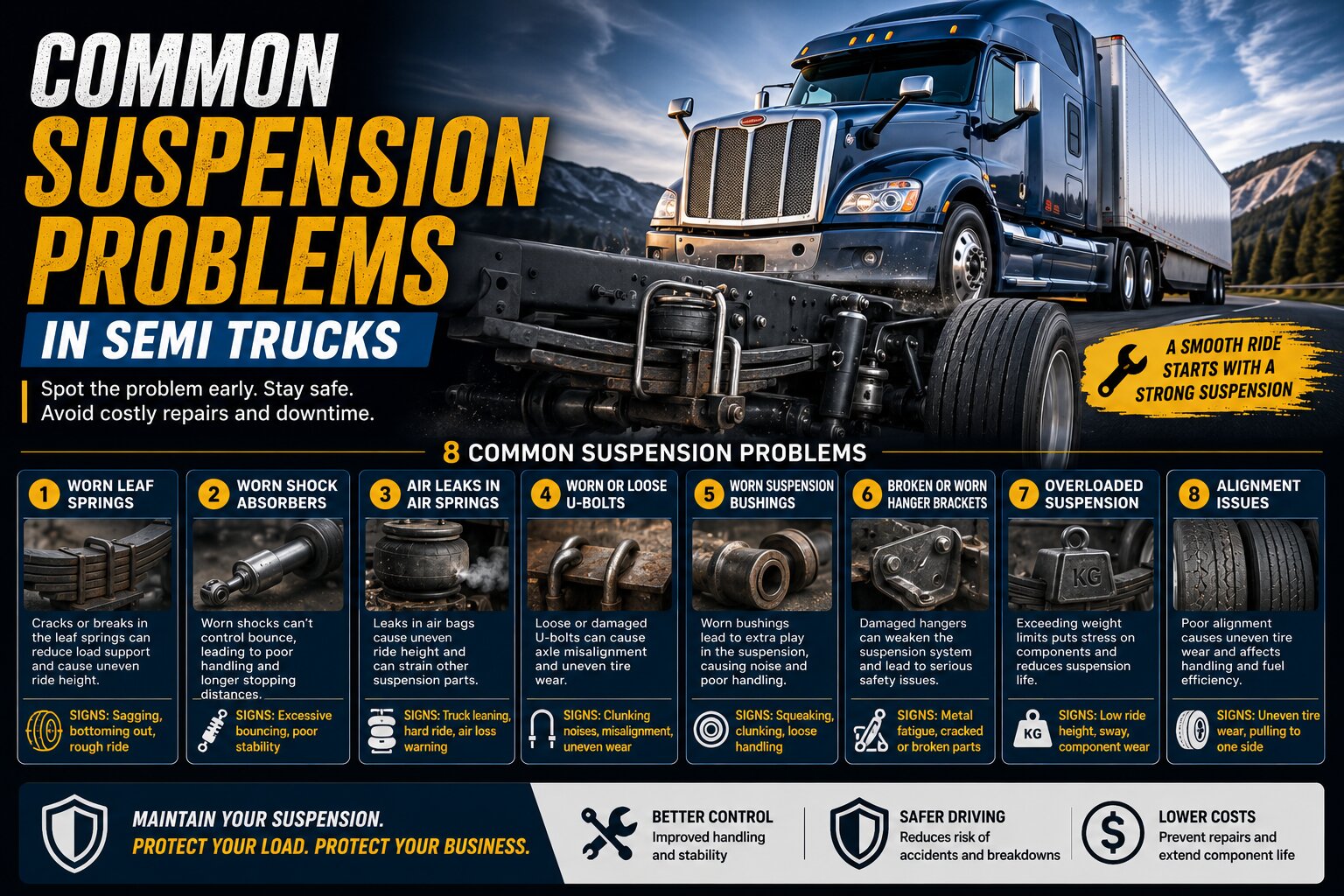
1. Worn Air Springs
Air springs, also called air bags, are common in modern semi truck suspension systems.
They absorb road shocks and support heavy loads.
Signs of Worn Air Springs
Uneven ride height
Truck leaning to one side
Rough ride quality
Excessive bouncing
Air leaks
Damaged air springs reduce suspension stability and increase tire wear.
2. Failed Shock Absorbers
Shock absorbers control suspension movement and reduce bouncing.
Over time, shocks wear out because of:
Heavy loads
Rough roads
Constant vibration
Symptoms of Bad Shock Absorbers
Excessive bouncing
Poor steering response
Increased stopping distance
Uneven tire wear
Worn shocks can also reduce braking efficiency.
3. Broken Leaf Springs
Leaf springs support heavy cargo loads in many commercial trucks.
Cracked or broken leaf springs can seriously affect load stability.
Common Signs
Sagging suspension
Uneven truck height
Loud clunking noises
Poor weight distribution
Driving with broken leaf springs increases accident risk.
4. Worn Torque Rod Bushings
Torque rods help maintain axle alignment and stability.
Bushings wear out because of:
Road vibration
Heavy hauling
Harsh weather
Signs of Bad Torque Rod Bushings
Loose handling
Vibration
Uneven tire wear
Axle movement
Ignoring these issues can damage other suspension components.
5. Suspension Alignment Problems
Poor alignment affects:
Tire wear
Fuel efficiency
Steering control
Misalignment often occurs because of:
Potholes
Heavy loads
Suspension wear
Regular alignment inspections improve handling and reduce operating costs.
6. Air Suspension Leaks
Air suspension systems rely on pressurized air for proper operation.
Leaks can occur in:
Air lines
Valves
Air bags
Compressors
Warning Signs
Drooping suspension
Air compressor constantly running
Uneven ride height
Air leaks reduce suspension performance significantly.
7. Worn Suspension Bushings
Bushings cushion metal suspension components and reduce vibration.
Over time, they crack or wear out.
Symptoms Include
Squeaking noises
Vibration
Loose steering
Poor ride comfort
Replacing worn bushings improves ride quality and stability.
Signs of Suspension Damage
Fleet operators should monitor for warning signs such as:
Uneven tire wear
Rough ride quality
Excessive truck bouncing
Leaning during turns
Steering instability
Clunking noises
Poor braking control
Early detection prevents expensive breakdowns.
Causes of Suspension Wear
Several factors contribute to suspension damage.
Heavy Cargo Loads
Overloaded trucks place excessive stress on suspension systems.
This accelerates wear on:
Air springs
Bushings
Shock absorbers
Leaf springs
Poor Road Conditions
Potholes and rough roads create constant impact stress.
This is especially common during Canadian winters.
Harsh Weather Conditions
Road salt, snow, moisture, and freezing temperatures accelerate corrosion and component wear.
Lack of Maintenance
Ignoring routine inspections allows small suspension issues to become major repairs.
Air Suspension vs Leaf Spring Suspension
Semi trucks commonly use either air suspension or leaf spring suspension systems.
Air suspension systems are more common in long-haul trucks because they improve comfort and cargo protection.
How Poor Suspension Affects Truck Performance
Suspension problems affect more than ride quality.
They also impact:
Fuel efficiency
Tire lifespan
Steering control
Brake performance
Driver fatigue
Poor suspension systems force trucks to work harder, increasing maintenance costs over time.
Suspension Maintenance Checklist
Routine maintenance is essential for heavy duty trucks.
Inspect Air Springs
Check for:
Cracks
Leaks
Uneven wear
Inspect Shock Absorbers
Look for:
Oil leaks
Damage
Weak damping
Check Bushings and Torque Rods
Inspect for:
Cracks
Excessive movement
Wear
Inspect Leaf Springs
Look for:
Cracks
Rust
Loose mounting hardware
Check Alignment
Proper alignment improves:
Fuel efficiency
Tire wear
Steering stability
Preventive Maintenance Tips
Preventive maintenance helps fleets avoid downtime and expensive repairs.
Schedule Regular Inspections
Inspect suspension systems regularly based on:
Mileage
Road conditions
Load weight
Avoid Overloading Trucks
Excess weight accelerates suspension wear.
Replace Worn Parts Quickly
Small issues often lead to larger repairs if ignored.
Use High-Quality Suspension Parts
Durable truck suspension components improve:
Reliability
Safety
Performance
Importance of Quality Suspension Parts
Cheap suspension parts often wear faster and increase maintenance costs.
Reliable heavy duty suspension parts help:
Improve ride quality
Reduce downtime
Extend component lifespan
Improve fleet safety
Trusted suppliers provide parts designed for Canadian trucking conditions.
Canadian Weather and Suspension Systems
Canadian weather creates additional challenges for suspension systems.
Winter Road Salt
Salt accelerates corrosion on:
Suspension brackets
Bushings
Metal components
Freezing Temperatures
Cold weather can stiffen rubber bushings and affect suspension flexibility.
Rough Winter Roads
Potholes and uneven road surfaces increase suspension stress.
Routine winter inspections are essential.
Suspension Repair Costs
Suspension repair costs vary depending on:
Truck model
Component damage
Labor rates
Part quality
Preventive maintenance is far more affordable than major suspension failures.
Expert Tips for Fleet Managers
Industry professionals recommend:
Monthly suspension inspections
Driver reporting programs
Preventive maintenance schedules
Quality aftermarket suspension parts
Strong maintenance programs reduce downtime and improve safety.
People Also Ask
What are the signs of bad suspension on a semi truck?
Common signs include uneven tire wear, excessive bouncing, rough ride quality, and steering instability.
How often should semi truck suspension systems be inspected?
Most fleet experts recommend inspections every 20,000–30,000 kilometers or sooner for heavy-use trucks.
Can suspension problems affect fuel efficiency?
Yes. Poor alignment and worn suspension components increase rolling resistance and fuel consumption.
Are air suspension systems better for semi trucks?
Air suspension systems provide better comfort, stability, and cargo protection for long-haul operations.
Why Suspension Safety Matters
Reliable suspension systems help:
Improve truck stability
Protect drivers
Reduce tire wear
Improve fuel efficiency
Protect cargo
Fleet owners who prioritize suspension maintenance often experience lower operating costs and fewer roadside breakdowns.
Final Thoughts
Semi truck suspension systems are essential for safety, handling, ride comfort, and operational efficiency.
Ignoring suspension problems can lead to tire wear, poor steering control, expensive repairs, and dangerous driving conditions. By understanding common suspension problems in semi trucks and implementing preventive maintenance programs, fleet owners can improve safety while reducing downtime and repair costs.
Whether you operate long-haul trucks or commercial fleets in Canada, investing in quality suspension parts and regular inspections is one of the smartest ways to improve vehicle reliability.
For dependable heavy duty truck suspension parts and expert support in Canada, visit Gill Truck Parts today.
FAQ Section
What causes semi truck suspension failure?
Heavy loads, rough roads, weather conditions, and poor maintenance are common causes.
How do I know if my truck suspension is bad?
Warning signs include bouncing, uneven tire wear, rough ride quality, and steering instability.
Can worn suspension affect braking?
Yes. Poor suspension reduces vehicle stability and braking performance.
Are air suspensions expensive to repair?
Air suspension systems can cost more to repair but provide better comfort and load support.
How long do truck suspension parts last?
Lifespan depends on driving conditions, maintenance, and load weight.