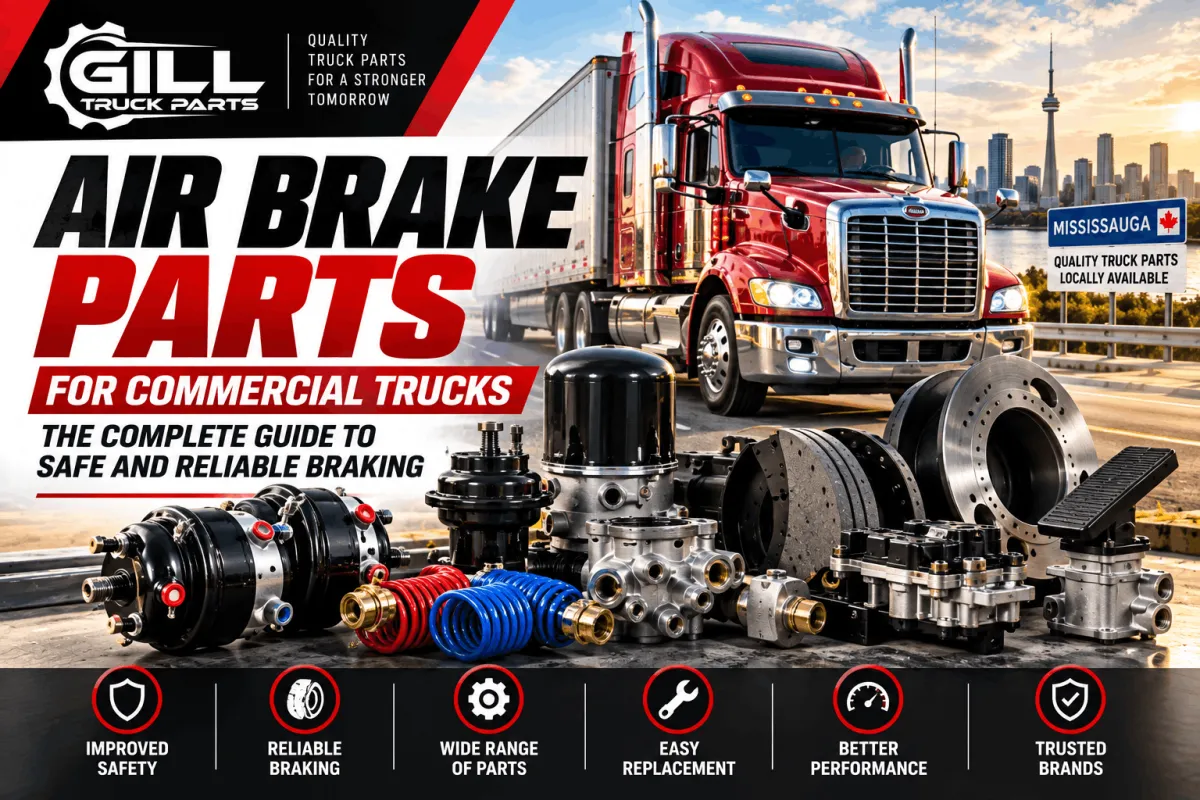
Air Brake Parts for Commercial Trucks: The Complete Guide to Safe and Reliable Braking
Air brake systems are one of the most important safety features on commercial trucks. Unlike hydraulic braking systems used in passenger vehicles, air brakes rely on compressed air to deliver consistent stopping power for heavy loads. Every component in the system must work together to ensure reliable braking performance, reduce stopping distances, and keep drivers safe on the road.
Understanding air brake parts for commercial trucks helps fleet managers, owner-operators, and maintenance professionals identify worn components before they cause costly repairs or safety issues. Regular inspections and timely replacement of critical air brake components not only improve vehicle performance but also help ensure compliance with commercial vehicle safety regulations.
At Gill Truck Parts, we supply a wide range of premium heavy-duty truck parts, including air brake components, steering parts, suspension systems, cooling system parts, wheel-end assemblies, and drivetrain components for commercial trucks across Canada.
Why Air Brake Parts Matter in Commercial Trucks
Commercial trucks transport heavy loads over long distances, often under demanding road and weather conditions. The air brake system must provide reliable braking performance every time the driver applies the brakes.
Using high-quality air brake parts offers several important benefits.
Improve Vehicle Safety
A properly functioning air brake system provides consistent braking force, helping drivers maintain control during emergency stops, downhill driving, and adverse weather conditions.
Key safety benefits include:
Reliable stopping power
Better vehicle stability
Reduced stopping distances
Improved driver confidence
Enhanced road safety
Reduce Maintenance Costs
Replacing worn air brake components before failure helps prevent damage to related parts and reduces overall repair expenses.
Routine maintenance helps minimize:
Unexpected breakdowns
Expensive emergency repairs
Component failures
Vehicle downtime
Increase Fleet Reliability
Reliable air brake components keep trucks operating efficiently and reduce the likelihood of service interruptions.
Fleet operators benefit from:
Higher vehicle uptime
Improved delivery schedules
Lower operating costs
Longer component lifespan
Support Regulatory Compliance
Commercial vehicles are subject to strict brake inspection requirements. Properly maintained air brake systems help ensure compliance with transportation safety regulations while reducing the risk of inspection violations.
How Air Brake Systems Work
Unlike hydraulic brake systems, commercial trucks use compressed air to activate the brakes. Air is generated by an engine-driven compressor, stored in reservoirs, and delivered through valves and airlines to the brake chambers when the driver presses the brake pedal.
This design provides dependable braking performance even under heavy loads while offering built-in safety features that help prevent complete brake failure if part of the system experiences a problem.
The Air Brake Process
The basic operating sequence includes:
The air compressor generates compressed air.
The air dryer removes moisture and contaminants.
Compressed air is stored inside air reservoirs.
Pressing the brake pedal sends air through the brake valves.
Brake chambers convert air pressure into mechanical force.
Slack adjusters transfer that force to the brake shoes or brake pads.
The vehicle slows or stops safely.
Each component performs a specific function, making routine inspections essential for safe operation.
Major Air Brake Parts for Commercial Trucks
An air brake system consists of multiple components working together to deliver reliable braking performance.
Air Compressor
The air compressor is the heart of the air brake system. It continuously compresses air while the engine is running and supplies the pressure required for braking.
Functions of the Air Compressor
Produces compressed air
Maintains system pressure
Supplies air to storage tanks
Supports multiple vehicle systems
A properly functioning compressor ensures the brake system always has sufficient air pressure.
Signs of Air Compressor Failure
Common warning signs include:
Slow air pressure build-up
Low system pressure
Excessive oil carryover
Unusual compressor noise
Frequent compressor cycling
Prompt replacement helps maintain reliable braking performance.
Air Dryer
The air dryer removes moisture, oil vapor, and contaminants from compressed air before it reaches the brake system.
Moisture inside the air system can cause corrosion, frozen airlines during winter, and premature valve failure.
Functions of the Air Dryer
Removes water from compressed air
Filters contaminants
Protects brake valves
Extends component life
Signs of a Faulty Air Dryer
Common symptoms include:
Moisture in air tanks
Frozen air lines
Corroded valves
Frequent air system contamination
Replacing the air dryer cartridge at recommended service intervals helps maintain clean, dry compressed air.
Air Reservoirs
Air reservoirs, also known as air tanks, store compressed air until it is needed by the braking system.
Commercial trucks typically use multiple reservoirs to ensure adequate air supply and improve braking safety.
Functions of Air Reservoirs
Store compressed air
Supply emergency braking
Maintain system pressure
Support auxiliary air systems
Signs of Air Reservoir Problems
Inspect air tanks regularly for:
Rust or corrosion
Air leaks
Physical damage
Moisture accumulation
Loose mounting brackets
Routine draining of air tanks helps remove moisture and extend system life.
Brake Chambers
Brake chambers convert compressed air into mechanical force that applies the brakes.
Spring brake chambers also provide emergency braking and parking brake functions.
Functions of Brake Chambers
Convert air pressure into braking force
Apply service brakes
Activate parking brakes
Support emergency braking
Common Signs of Brake Chamber Failure
Watch for:
Air leaks
Damaged diaphragms
Corrosion
Slow brake application
Reduced braking force
Brake chambers should be inspected during every preventive maintenance service.
Slack Adjusters
Slack adjusters maintain the correct clearance between the brake lining and the braking surface.
Modern commercial trucks typically use automatic slack adjusters, but they still require regular inspection.
Functions of Slack Adjusters
Maintain proper brake adjustment
Improve braking consistency
Reduce brake wear
Increase braking efficiency
Symptoms of Worn Slack Adjusters
Common warning signs include:
Excessive pushrod travel
Uneven braking
Longer stopping distances
Brake inspection failures
Proper adjustment helps maintain consistent braking performance and extend brake component life.
Brake Drums
Brake drums are commonly used on heavy-duty commercial trucks and work with brake shoes to create the friction needed to slow the vehicle.
Functions of Brake Drums
Provide a friction surface
Dissipate heat
Support braking performance
Maintain braking stability
Signs Brake Drums Need Replacement
Inspect for:
Cracks
Heat checking
Excessive wear
Out-of-round condition
Blue discoloration from overheating
Damaged brake drums should be replaced promptly to maintain safe stopping performance.
Brake Shoes
Brake shoes contain friction material that presses against the brake drum when the brakes are applied.
Functions of Brake Shoes
Create braking friction
Slow wheel rotation
Support consistent braking
Withstand high temperatures
Signs of Worn Brake Shoes
Common indicators include:
Thin friction material
Cracks
Uneven wear
Reduced braking efficiency
Grinding noises
Replacing brake shoes before they become excessively worn helps protect brake drums and maintain reliable braking performance.
Major Air Brake Parts for Commercial Trucks (Continued)
A commercial truck's air brake system relies on several interconnected components to provide consistent and dependable braking performance. Understanding the role of each part helps identify potential issues early and supports a proactive maintenance program.
Brake Valves
Brake valves regulate the flow and pressure of compressed air throughout the braking system. They ensure the correct amount of air reaches the brake chambers whenever the driver applies the brakes.
Types of Brake Valves
Commercial trucks commonly use:
Foot brake valves
Relay valves
Quick-release valves
Tractor protection valves
Parking brake valves
Inversion valves
Each valve performs a specific function to ensure safe and responsive braking.
Signs of Brake Valve Failure
Common warning signs include:
Air leaks
Delayed brake response
Inconsistent braking
Low air pressure
Sticking brake pedal
Faulty brake valves should be replaced immediately to maintain proper brake operation.
Air Lines and Brake Hoses
Air lines transport compressed air between the compressor, reservoirs, valves, and brake chambers. Since these hoses operate under high pressure, they must remain in excellent condition.
Functions of Air Lines
Deliver compressed air
Maintain system pressure
Connect brake components
Support emergency braking
Common Air Line Problems
Inspect for:
Cracked hoses
Air leaks
Loose fittings
Abrasion damage
Kinked or collapsed hoses
Even a small air leak can reduce braking performance and increase compressor workload.
Anti-Lock Braking System (ABS) Components
Many modern commercial trucks are equipped with Anti-Lock Braking Systems (ABS) to improve braking control during emergency situations.
ABS helps prevent wheel lockup, allowing drivers to maintain steering control while braking.
Main ABS Components
Wheel speed sensors
Electronic control module (ECM)
ABS modulator valves
Wiring harnesses
Tone rings
Signs of ABS Problems
Watch for:
ABS warning light
Inconsistent braking
Fault codes
Damaged wheel speed sensors
Electrical connection issues
Prompt diagnosis helps maintain both braking performance and vehicle safety.
Spring Brake Chambers
Spring brake chambers combine service braking with emergency and parking brake functions.
Unlike service brakes, spring brakes use powerful internal springs that automatically apply the brakes if air pressure drops below a safe level.
Functions of Spring Brake Chambers
Apply parking brakes
Provide emergency braking
Prevent uncontrolled vehicle movement
Improve overall braking safety
Signs of Spring Brake Failure
Common symptoms include:
Air leaks
Damaged spring housing
Parking brake issues
Slow brake release
Corrosion
Because spring brakes are critical safety components, they should be inspected regularly.
S-Cams and Camshafts
Many heavy-duty drum brake systems use S-cams to convert pushrod movement into brake shoe expansion.
Proper lubrication and adjustment are essential for smooth operation.
Functions of S-Cams
Transfer braking force
Expand brake shoes
Ensure even brake application
Reduce brake wear
Signs of Worn S-Cams
Inspect for:
Uneven brake wear
Excessive play
Rust
Poor brake response
Worn bushings
Routine lubrication significantly extends S-cam service life.
Brake Pads and Rotors (Air Disc Brake Systems)
Many newer Volvo, Freightliner, Kenworth, and Peterbilt trucks use air disc brakes instead of traditional drum brakes.
Air disc brakes provide improved stopping performance, better heat dissipation, and easier maintenance.
Brake Pads
Brake pads create friction against the brake rotor to slow the vehicle.
Signs Brake Pads Need Replacement
Squealing noises
Reduced braking performance
Thin friction material
Uneven wear
Brake warning indicators
Brake Rotors
Brake rotors provide the braking surface used by air disc brake pads.
Common Rotor Problems
Warping
Heat cracks
Deep grooves
Corrosion
Excessive wear
Replacing brake pads before they become excessively worn helps extend rotor life.
Common Air Brake Problems
Although air brake systems are extremely reliable, several issues commonly occur as components wear over time.
Air Leaks
Air leaks are among the most common brake system problems.
Leaks may occur at:
Brake chambers
Air valves
Air lines
Hose fittings
Air reservoirs
Air leaks reduce system pressure and increase compressor operating time.
Low Air Pressure
Insufficient air pressure affects braking performance and may activate low-pressure warning systems.
Possible causes include:
Compressor failure
Air leaks
Damaged governor
Blocked air dryer
Faulty pressure valves
Never operate a commercial truck with insufficient brake system pressure.
Brake Drag
Brake drag occurs when brakes fail to release completely.
Common causes include:
Sticking brake chambers
Improper slack adjustment
Damaged S-cams
Corroded brake hardware
Contaminated brake components
Brake drag increases fuel consumption while accelerating brake wear.
Uneven Braking
Uneven braking may cause the truck to pull toward one side during braking.
Potential causes include:
Uneven brake adjustment
Worn brake linings
Damaged brake chambers
Contaminated friction material
Faulty valves
Correcting uneven braking improves vehicle stability and driver safety.
Moisture Contamination
Moisture inside compressed air systems causes corrosion and may freeze during cold weather.
Common effects include:
Frozen valves
Corroded reservoirs
Reduced air pressure
Brake valve damage
Air line restrictions
Maintaining the air dryer and draining reservoirs regularly helps prevent moisture-related issues.
Preventive Maintenance Tips for Air Brake Systems
Routine inspections significantly reduce the likelihood of unexpected brake failures.
Perform Daily Air System Inspections
Drivers should inspect the brake system before every trip.
Check for:
Air leaks
Low air pressure
Warning lights
Brake chamber damage
Air line condition
Daily inspections improve safety and help identify developing problems early.
Drain Air Reservoirs
Although modern air dryers remove most moisture, air tanks should still be drained regularly to eliminate accumulated water and contaminants.
Benefits include:
Reduced corrosion
Improved brake reliability
Longer component life
Better winter performance
Inspect Brake Linings
Brake shoes and brake pads should be inspected regularly for:
Thickness
Cracks
Heat damage
Oil contamination
Uneven wear
Replacing friction material before it reaches minimum thickness protects drums and rotors.
Lubricate Moving Components
Proper lubrication reduces friction and extends the lifespan of:
S-cams
Bushings
Slack adjusters
Linkage components
Always follow the manufacturer's recommended lubrication schedule.
Replace Worn Components Promptly
Delaying repairs often causes additional wear to surrounding brake components.
Replacing worn parts early helps:
Improve braking performance
Reduce repair costs
Increase fleet uptime
Maintain regulatory compliance
OEM vs. Aftermarket Air Brake Parts
Truck owners often choose between Original Equipment Manufacturer (OEM) and premium aftermarket brake components.
Benefits of OEM Air Brake Parts
OEM parts are manufactured to the vehicle's original specifications.
Advantages include:
Exact fitment
Factory-tested quality
Consistent braking performance
Manufacturer engineering standards
Benefits of Premium Aftermarket Air Brake Parts
Premium aftermarket parts offer excellent value while delivering dependable performance.
Benefits include:
Lower replacement costs
Broad product availability
Excellent durability
Competitive warranties
Components designed to meet or exceed OEM standards
OEM vs. Aftermarket Comparison
Whether you choose OEM or premium aftermarket components, purchasing from a trusted heavy-duty truck parts supplier ensures reliable braking performance and long-term value.
How to Choose the Right Air Brake Parts for Commercial Trucks
Selecting the correct air brake parts is essential for maintaining safe braking performance, maximizing component lifespan, and reducing vehicle downtime. Whether you're replacing a single component or rebuilding an entire brake system, choosing high-quality parts helps ensure reliable operation under demanding commercial conditions.
Verify Vehicle Compatibility
Before purchasing replacement components, confirm they are compatible with your truck's specifications.
Verify the following information:
Truck make and model
Model year
Vehicle Identification Number (VIN)
Brake system configuration
Original equipment (OE) part number
Installing the correct component helps prevent fitment issues, improves braking performance, and reduces installation time.
Choose High-Quality Materials
Air brake components are exposed to heavy loads, moisture, vibration, and constant use. Selecting durable, high-quality materials helps improve reliability and extend service life.
Look for products that feature:
Corrosion-resistant coatings
Heat-treated steel components
High-quality rubber seals
Precision-machined parts
OEM-quality friction materials
Quality materials reduce premature wear and improve long-term performance.
Buy From Reputable Manufacturers
Trusted manufacturers invest in engineering, quality testing, and strict production standards to ensure dependable performance.
Benefits of choosing reputable brands include:
Consistent product quality
Longer service life
Better fit and finish
Reliable braking performance
Strong warranty support
Consider Warranty Coverage
A manufacturer's warranty demonstrates confidence in the product's quality and provides additional protection for your investment.
Before purchasing, review:
Warranty period
Coverage limitations
Manufacturing defect protection
Replacement policies
Work With an Experienced Truck Parts Supplier
An experienced supplier can help you identify compatible replacement parts and recommend products suited to your truck's operating conditions.
Professional support helps:
Reduce ordering mistakes
Minimize downtime
Simplify maintenance planning
Improve repair efficiency
Air Brake System Maintenance Checklist
A preventive maintenance program helps keep commercial truck air brake systems operating safely and efficiently.
Inspect the following components regularly:
Air compressor
Air dryer cartridge
Air reservoirs
Brake chambers
Spring brake chambers
Brake valves
Air lines and hoses
Slack adjusters
S-cams and bushings
Brake drums
Brake shoes
Brake pads (air disc systems)
Brake rotors
ABS sensors
Wheel speed sensors
Air pressure gauges
Parking brake operation
Routine inspections reduce the risk of unexpected failures while helping fleets comply with commercial vehicle safety standards.
Why Buy Air Brake Parts from Gill Truck Parts?
At Gill Truck Parts, we understand that dependable braking performance is essential for every commercial vehicle. We supply high-quality heavy-duty truck parts designed to help fleets, owner-operators, and repair facilities maintain safe, reliable trucks.
Extensive Inventory
Our inventory includes a wide range of heavy-duty truck parts for major commercial truck brands.
Available product categories include:
Air brake components
Steering parts
Suspension components
Cooling system parts
Wheel-end assemblies
Drivetrain components
Engine parts
Electrical components
Whether you're performing routine maintenance or a major repair, we have the parts you need to keep your truck operating efficiently.
Quality Replacement Parts
We supply dependable replacement components that meet demanding commercial vehicle requirements and deliver long-lasting performance.
Our product selection is designed to provide:
Reliable braking performance
Long service life
Excellent durability
Consistent fit and compatibility
Expert Product Support
Finding the correct replacement component can be challenging. Our knowledgeable team is available to help identify compatible air brake parts based on your truck's specifications and maintenance needs.
Fast Availability
Vehicle downtime affects productivity and profitability. We work to provide prompt access to the heavy-duty truck parts you need so repairs can be completed quickly and efficiently.
Frequently Asked Questions
What is the most important component of an air brake system?
Every component plays a critical role, but the air compressor, brake chambers, brake valves, and slack adjusters are among the most essential because they generate, control, and apply braking force throughout the system.
How often should commercial truck air brake systems be inspected?
Drivers should perform a visual air brake inspection before every trip, while a complete inspection should be included in every scheduled preventive maintenance service according to the manufacturer's recommendations and applicable safety regulations.
How long do air brake components last?
The lifespan of air brake components depends on operating conditions, driving habits, maintenance practices, and vehicle load. Components such as brake shoes, brake pads, slack adjusters, and air dryer cartridges may require replacement more frequently than air reservoirs or brake valves.
What causes low air pressure in a commercial truck?
Low air pressure is commonly caused by:
Air leaks
Failing air compressors
Faulty governors
Damaged air dryers
Defective brake valves
Leaking brake chambers
The source of the problem should be diagnosed and repaired before operating the vehicle.
Are aftermarket air brake parts reliable?
Yes. Premium aftermarket air brake parts from reputable manufacturers are designed to meet or exceed OEM performance standards and are widely used by commercial fleets and independent repair facilities.
What are the most commonly replaced air brake parts?
Frequently replaced components include:
Brake shoes
Brake pads
Brake drums
Brake rotors
Air dryer cartridges
Brake chambers
Slack adjusters
Air hoses
ABS sensors
Air valves
Regular inspections help determine when replacement is necessary.
Conclusion
The air brake system is one of the most important safety systems on any commercial truck. Every component—from the air compressor and air dryer to the brake chambers, slack adjusters, valves, brake shoes, and ABS sensors—works together to deliver reliable stopping power under demanding operating conditions.
Routine inspections, preventive maintenance, and timely replacement of worn air brake parts help improve braking performance, reduce repair costs, minimize vehicle downtime, and support compliance with commercial vehicle safety standards.
Whether you operate a single truck or manage an entire fleet, investing in high-quality air brake parts is essential for maintaining safe, dependable operation. Choosing reliable replacement components and following a proactive maintenance schedule helps protect both your drivers and your business.
At Gill Truck Parts, we proudly supply premium air brake parts for commercial trucks along with a complete range of heavy-duty truck components. From routine maintenance items to complete brake system replacements, our knowledgeable team is ready to help you find the right parts to keep your trucks operating safely and efficiently.