




Blog
Stay Informed With Expert Auto Tips & Insights
We’re dedicated to providing you with the latest automotive news, maintenance tips, and expert advice. Our blog is your go-to resource for everything from vehicle care to understanding common issues and how to prevent them.
Mastery.
Proficiency.
Creativity.
Revolution.
How to Improve Truck Fuel Efficiency
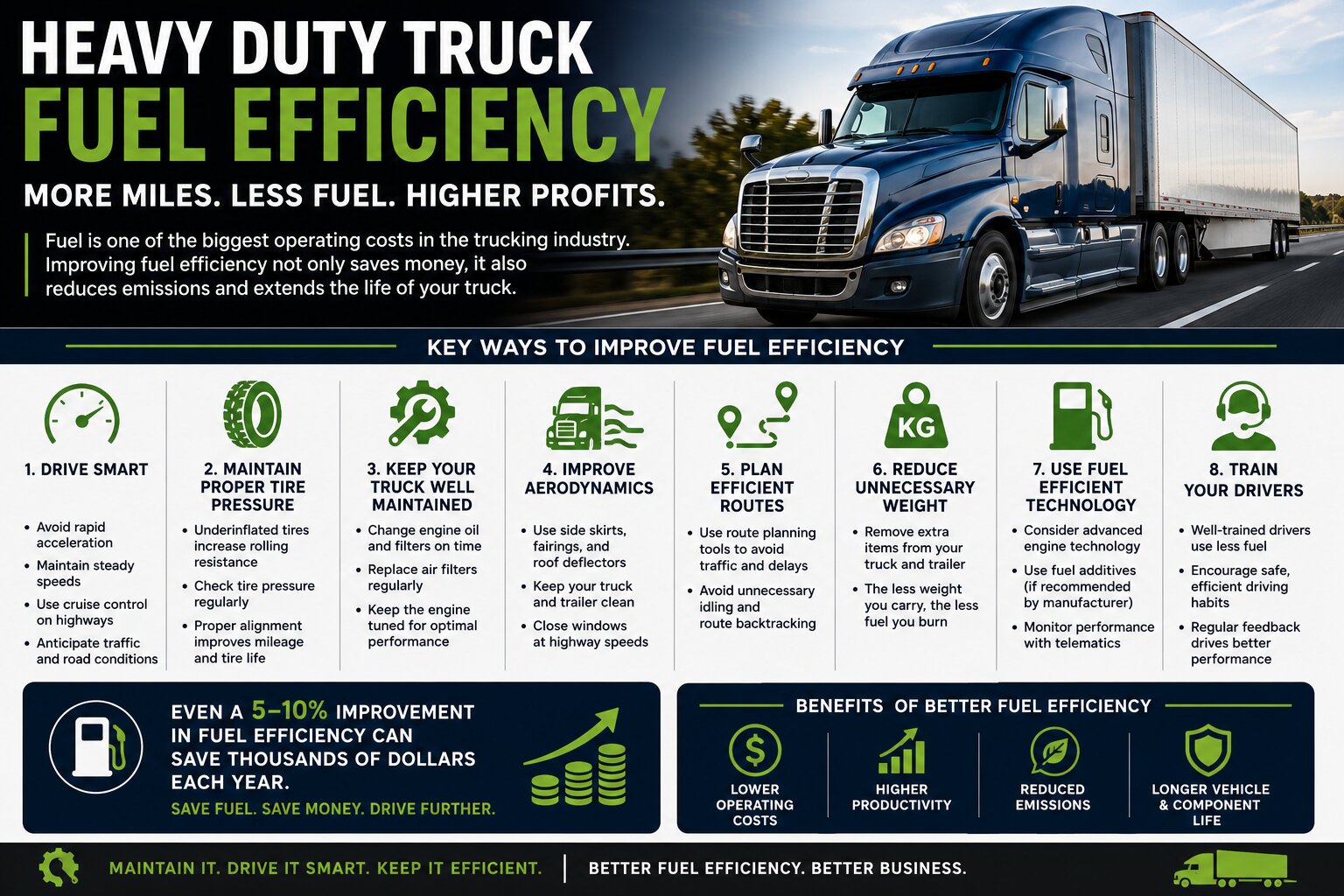
Fuel costs are one of the biggest expenses in the trucking industry. Whether you operate a single semi truck or manage a large commercial fleet in Canada, improving truck fuel efficiency can save thousands of dollars every year.
With rising diesel prices, harsh Canadian weather, and long-haul transportation demands, fuel economy has become more important than ever. Even small improvements in fuel consumption can significantly reduce operating costs, improve vehicle performance, and increase profitability.
The good news is that improving heavy duty truck fuel efficiency does not always require expensive upgrades. In many cases, proper maintenance, smart driving habits, and high-quality truck parts can make a noticeable difference.
In this complete guide, you will learn practical ways to improve truck fuel efficiency, reduce fuel waste, and extend the lifespan of your commercial vehicles.
Table of Contents
Why Truck Fuel Efficiency Matters
What Affects Fuel Economy in Heavy Duty Trucks?
Best Ways to Improve Truck Fuel Efficiency
Importance of Preventive Maintenance
Tire Maintenance and Fuel Savings
How Driving Habits Impact Fuel Consumption
Aerodynamics and Fuel Efficiency
Reducing Engine Idle Time
Choosing the Right Truck Parts
Seasonal Fuel Efficiency Tips for Canada
Fleet Management Strategies
Common Fuel Efficiency Mistakes
Fuel-Efficient Truck Technologies
People Also Ask
Final Thoughts
Why Truck Fuel Efficiency Matters
Fuel expenses can account for up to 30%–40% of total fleet operating costs. For trucking businesses in Canada, fuel efficiency directly impacts profitability.
Better fuel economy helps:
Lower fuel expenses
Reduce vehicle wear
Improve engine performance
Decrease downtime
Reduce carbon emissions
Increase fleet productivity
For owner-operators and fleet managers, every liter of diesel saved contributes to long-term business growth.
What Affects Fuel Economy in Heavy Duty Trucks?
Several factors influence truck fuel consumption.
Key Factors Include:
Engine condition
Tire pressure
Truck weight
Driving habits
Aerodynamics
Weather conditions
Idle time
Fuel quality
Brake system performance
Understanding these factors helps identify areas for improvement.
Best Ways to Improve Truck Fuel Efficiency
1. Maintain Proper Tire Pressure
Underinflated tires increase rolling resistance, forcing the engine to work harder.
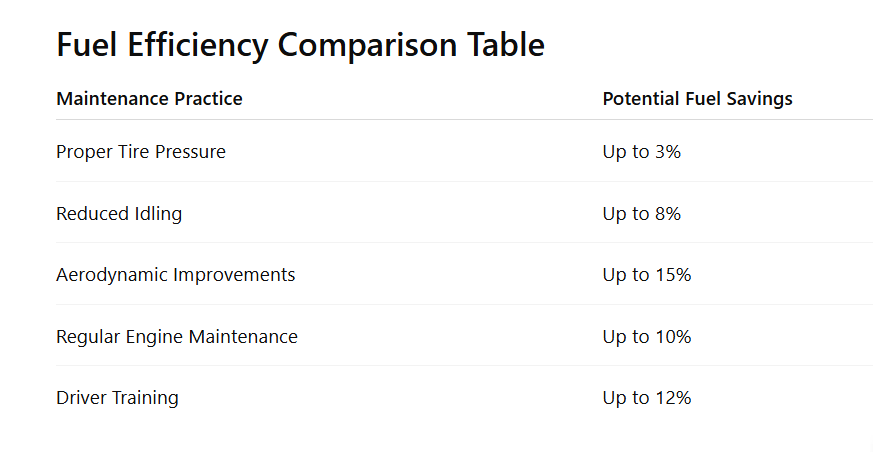
According to transportation studies, low tire pressure can reduce fuel efficiency by up to 3%.
Benefits of Proper Tire Pressure
Better fuel economy
Longer tire lifespan
Improved safety
Better traction during Canadian winters
Pro Tip
Inspect tire pressure weekly, especially during temperature changes.
2. Reduce Excessive Idling
Truck idling wastes a significant amount of fuel.
A heavy duty truck can burn approximately 3–4 liters of diesel per hour while idling.
Ways to Reduce Idle Time
Shut off the engine during long stops
Use auxiliary power units
Plan routes efficiently
Avoid unnecessary warm-up periods
Reducing idle time also lowers engine wear.
3. Improve Driving Habits
Driving style has a major impact on fuel economy.
Aggressive driving behaviors such as:
Rapid acceleration
Hard braking
Speeding
can increase fuel consumption dramatically.
Fuel-Efficient Driving Tips
Maintain steady speeds
Use cruise control on highways
Accelerate gradually
Anticipate traffic conditions
Avoid sudden braking
Smooth driving improves both safety and fuel efficiency.
4. Perform Regular Engine Maintenance
A poorly maintained engine burns more fuel.
Routine inspections help ensure optimal engine performance.
Essential Maintenance Tasks
Oil changes
Air filter replacement
Fuel injector cleaning
Cooling system inspections
Brake inspections
Dirty filters and worn components force engines to work harder.
Importance of Preventive Maintenance
Preventive maintenance is one of the most effective ways to improve fuel economy.
Fleet managers who follow scheduled maintenance programs often experience:
Lower repair costs
Reduced downtime
Better mileage
Longer engine life
Key Components That Affect Fuel Efficiency
Air Filters
Dirty air filters reduce airflow to the engine.
This affects combustion efficiency and fuel consumption.
Fuel Injectors
Faulty injectors disrupt fuel delivery and reduce performance.
Regular injector cleaning improves combustion.
Brake Components
Dragging brakes create unnecessary resistance.
Maintaining brake drums, pads, and wheel components helps improve fuel efficiency.
Tire Maintenance and Fuel Savings
Tires play a critical role in fuel economy.
Fuel-Efficient Tire Practices
Rotate Tires Regularly
Uneven wear increases rolling resistance.
Use Low Rolling Resistance Tires
These tires reduce friction and improve mileage.
Check Wheel Alignment
Misaligned wheels increase fuel usage and tire wear.
How Driving Habits Impact Fuel Consumption
Driver behavior affects fuel economy more than many fleet owners realize.
Speed and Fuel Efficiency
Driving at high speeds increases wind resistance.
Fuel economy typically decreases significantly above 90 km/h.
Braking Habits
Frequent braking wastes momentum and fuel.
Maintaining safe following distances helps reduce unnecessary braking.
Route Planning
Efficient route planning minimizes:
Traffic congestion
Idle time
Extra mileage
GPS tracking and fleet software can improve route efficiency.
Aerodynamics and Fuel Efficiency
Aerodynamic drag is a major factor for long-haul trucks.
At highway speeds, wind resistance can dramatically increase fuel consumption.
Ways to Improve Aerodynamics
Install roof fairings
Use side skirts
Keep windows closed
Remove unnecessary exterior accessories
These improvements help trucks move more efficiently.
Reducing Engine Idle Time
Long idle periods waste fuel and increase engine wear.
Why Excessive Idling Is Bad
Wastes diesel
Increases emissions
Causes engine buildup
Reduces engine lifespan
Smart Idle Reduction Tips
Use bunk heaters
Install automatic shutdown systems
Train drivers on idle management
Choosing the Right Truck Parts
High-quality truck parts improve overall efficiency.
Cheap or worn parts can reduce performance and increase fuel consumption.
Important Fuel-Efficient Components
Brake Parts
Efficient braking systems reduce drag and rolling resistance.
Air Filters
Clean filters improve airflow and combustion.
Suspension Components
Healthy suspension systems reduce strain on tires and drivetrain components.
Engine Components
Reliable fuel injectors and cooling systems improve efficiency.
Choosing durable heavy duty truck parts helps reduce long-term maintenance costs.
Seasonal Fuel Efficiency Tips for Canada
Canadian weather conditions create additional fuel challenges.
Winter Fuel Efficiency Tips
Cold weather affects:
Tire pressure
Fuel viscosity
Engine warm-up times
Winter Maintenance Tips
Use winter-grade diesel
Check battery performance
Maintain tire pressure
Reduce excessive warm-up idling
Summer Fuel Efficiency Tips
Hot weather can strain cooling systems.
Summer Maintenance Includes
Radiator inspections
Coolant checks
Air conditioning maintenance
Preventing overheating improves fuel economy.
Fleet Management Strategies
Fleet management technology can improve fuel efficiency significantly.
Use Telematics Systems
Telematics provide data on:
Fuel consumption
Driver behavior
Idle time
Route efficiency
This helps fleet managers identify improvement opportunities.
Driver Training Programs
Educating drivers about fuel-efficient habits can reduce operating costs substantially.
Preventive Maintenance Scheduling
Digital maintenance tracking helps avoid costly breakdowns.
Common Fuel Efficiency Mistakes
Many trucking businesses unknowingly waste fuel.
Common Mistakes Include:
Ignoring tire pressure
Delaying maintenance
Excessive speeding
Poor route planning
Carrying unnecessary weight
Buying low-quality parts
Avoiding these mistakes can improve fleet efficiency quickly.
Fuel-Efficient Truck Technologies
Modern trucking technologies are helping fleets save fuel.
Advanced Technologies Include:
Automated transmissions
Predictive cruise control
Hybrid systems
Aerodynamic upgrades
Idle reduction technology
While some upgrades require investment, long-term fuel savings can be substantial.
Expert Tips From Industry Professionals
Experienced fleet operators recommend focusing on:
Preventive maintenance
Driver training
Quality replacement parts
Consistent inspections
Small improvements across multiple areas create major fuel savings over time.
People Also Ask
What speed is most fuel-efficient for trucks?
Most heavy duty trucks achieve optimal fuel efficiency between 80–90 km/h.
Can poor truck maintenance reduce fuel economy?
Yes. Dirty filters, worn brakes, and engine issues can significantly increase fuel consumption.
Do aerodynamic upgrades improve truck fuel efficiency?
Yes. Aerodynamic improvements reduce wind resistance and improve highway fuel economy.
How much fuel does truck idling waste?
A heavy duty truck can burn several liters of fuel per hour while idling.
Why Quality Truck Parts Matter
Using reliable truck parts helps:
Improve performance
Reduce fuel waste
Increase reliability
Prevent costly repairs
Commercial trucking operations depend on durable components that can handle Canadian weather and road conditions.
Working with trusted truck parts suppliers helps maintain long-term fleet efficiency.
Trust-Building Maintenance Strategy
Successful trucking businesses understand that fuel efficiency is not just about saving money.
It also improves:
Safety
Reliability
Customer satisfaction
Fleet lifespan
Routine maintenance and quality replacement parts protect your investment and reduce unexpected downtime.
Final Thoughts
Improving truck fuel efficiency is one of the smartest ways to reduce operating costs and increase profitability in the Canadian trucking industry.
Simple actions like maintaining tire pressure, reducing idle time, improving driving habits, and using quality heavy duty truck parts can create major long-term savings.
Whether you manage a large commercial fleet or operate a single semi truck, preventive maintenance and smart fuel-saving strategies can improve both vehicle performance and business efficiency.
For reliable heavy duty truck parts and expert support in Canada, visit Gill Truck Parts today.
FAQ Section
How can I improve my truck's fuel efficiency quickly?
Maintaining tire pressure, reducing idle time, and improving driving habits are some of the fastest ways to improve fuel economy.
Does truck weight affect fuel efficiency?
Yes. Heavier loads require more engine power and increase fuel consumption.
Can dirty air filters reduce fuel economy?
Yes. Restricted airflow affects engine performance and fuel combustion.
Is cruise control good for fuel efficiency?
Cruise control helps maintain steady speeds and can improve highway fuel economy.
How often should truck tires be checked?
Tire pressure and condition should be inspected weekly, especially during seasonal temperature changes.

Need Reliable Truck Parts? Get Expert Help Fast
Need dependable heavy duty truck parts in Mississauga or the GTA? Our experts help you quickly find the right components for your truck, reducing downtime and keeping your fleet running safely and efficiently.
Reliable distributor of heavy-duty truck parts in Mississauga, proudly serving the 401 Dixie corridor and the Greater Toronto Area.
Our Partner
Service Area
Contact us
1295 Shawson Dr, Mississauga, ON L4W 1C4

© 2026 Gill Truck Parts. All rights reserved. Powered by Xalovo AI